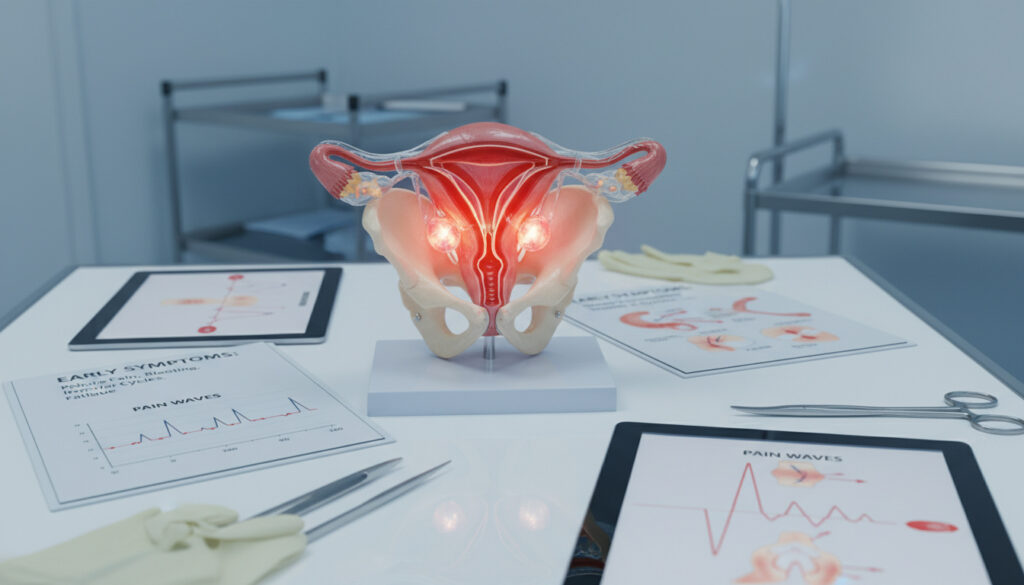
Pelvic Inflammatory Disease Symptoms – Early Signs and Pain
Pelvic inflammatory disease (PID) represents a serious infection of the upper female reproductive tract, encompassing the uterus, fallopian tubes, and ovaries. According to the Illinois Department of Public Health, this condition most commonly arises from sexually transmitted infections, particularly chlamydia and gonorrhea, ascending from the lower genital tract. Early recognition remains challenging because symptoms vary widely in intensity and presentation, with many cases producing only mild discomfort or no noticeable signs for days or even weeks.
The Cleveland Clinic notes that PID symptoms frequently mimic other abdominal conditions such as appendicitis or ectopic pregnancy, complicating self-diagnosis. When symptoms do appear, they typically include lower abdominal or pelvic pain, abnormal vaginal discharge, and systemic signs like fever. However, the American College of Obstetricians and Gynecologists emphasizes that asymptomatic cases are common, particularly among women of reproductive age, allowing the infection to progress undetected and cause lasting damage.
Understanding the specific manifestations of PID enables women to seek timely medical intervention. The NHS warns that delayed treatment significantly increases risks of infertility and chronic pelvic pain, making awareness of early warning signs critical for long-term reproductive health.
What Are the Common Symptoms of Pelvic Inflammatory Disease?
| Prevalence | Primary Causes | Key Symptoms | Urgency Level |
|---|---|---|---|
| Over 1 million U.S. women diagnosed annually | Bacterial STIs (chlamydia, gonorrhea) | Lower abdominal pain, fever, discharge | Seek care if pain persists beyond 48 hours |
- Lower abdominal pain serves as the hallmark symptom, presenting in the majority of diagnosed cases.
- Abnormal discharge—often yellow or green with foul odor—frequently accompanies the infection.
- Dyspareunia (pain during intercourse) represents a common but frequently overlooked indicator.
- Fever and chills suggest systemic spread of the bacterial infection beyond the cervix.
- Silent infections: Up to 50% of cases present with minimal or no symptoms, allowing undetected progression.
- Differential challenge: Symptom overlap with appendicitis and ectopic pregnancy complicates initial assessment.
- Recurrent risk: Repeated episodes dramatically increase the likelihood of permanent infertility.
| Symptom | Description | Frequency | Red Flag? |
|---|---|---|---|
| Lower abdominal pain | Dull or sharp ache/tenderness in lower abdomen/pelvis | Most common | Yes |
| Abnormal vaginal discharge | Heavy, foul-smelling, yellow or green discharge | Common | Yes |
| Dyspareunia | Pain during sexual intercourse | Common | Yes |
| Fever and chills | Elevated temperature, sometimes with nausea | Often present | Yes |
| Lower back pain | Pain radiating to the lower back | Frequently reported | Yes |
| Irregular uterine bleeding | Spotting between periods or unusually heavy menstruation | Common | Yes |
| Dysuria | Pain or burning during urination | Reported | Yes |
| Asymptomatic presentation | Absence of noticeable symptoms | Common (up to 50%) | No |
What Does PID Pain Feel Like?
Character and Location
Pain typically manifests as dull or sharp discomfort localized to the lower abdomen, pelvis, or lower back. The Illinois Department of Public Health identifies this pain as the hallmark symptom, often worsening with movement or pressure. Some patients describe constant aching, while others experience intermittent sharp stabbing sensations that intensify during physical activity.
Associated Sensations
Discomfort frequently extends to pain during intercourse (dyspareunia) or urination (dysuria), creating a constellation of pelvic discomfort that distinguishes PID from simple urinary tract infections. The Johns Hopkins Medicine notes that some women experience pain specifically during cervical manipulation or deep penetration.
Pain characteristics vary significantly between patients. While some experience constant dull aching, others report sharp, stabbing sensations. Pain severity does not always correlate with the extent of internal damage, meaning even mild discomfort warrants medical evaluation if accompanied by fever or discharge.
How Do You Know If You Have PID?
The Challenge of Asymptomatic Cases
The Mayo Clinic confirms that many women—particularly those with milder infections—experience no noticeable symptoms for days to weeks, allowing the condition to progress silently. This asymptomatic presentation proves particularly common in the early stages when bacteria first ascend from the cervix to the uterus and fallopian tubes.
Asymptomatic presentation occurs in a substantial portion of cases. The infection can spread from the cervix to the upper reproductive organs despite the absence of fever or pain, underscoring the importance of regular STI screening for sexually active women under 25.
When Suspicion Is Warranted
Women who have recently had an untreated STI, multiple sexual partners, or an IUD insertion should consider PID screening even in the absence of classic symptoms. The MedlinePlus database notes that recent childbirth, miscarriage, or abortion also elevate risk profiles significantly.
How Is PID Diagnosed?
Clinical Evaluation
No definitive test exists for PID; clinicians rely on symptom presentation combined with pelvic examination findings. The CDC treatment guidelines specify minimum diagnostic criteria including cervical motion tenderness, uterine tenderness, or adnexal tenderness in patients with lower abdominal pain. Mucopurulent discharge and elevated white blood cells on wet preparation support the diagnosis.
Laboratory and Imaging Confirmation
Healthcare providers collect vaginal and cervical swabs to identify bacterial causes, perform wet prep examinations, and conduct STI screening for chlamydia and gonorrhea. The National Center for Biotechnology Information indicates that transvaginal ultrasound may reveal tubo-ovarian abscesses, while endometrial biopsy or laparoscopy provides definitive confirmation in complex cases.
Because delayed treatment increases infertility risk, clinicians initiate empiric antibiotic therapy based on clinical suspicion without awaiting laboratory confirmation, according to Mayo Clinic protocols.
What Causes PID and What Happens If Untreated?
Chlamydia trachomatis and Neisseria gonorrhoeae represent the primary bacterial agents, detected in the majority of cases. Other bacteria associated with bacterial vaginosis or normal vaginal flora may also contribute to infection. Risk factors include multiple sexual partners, age under 25, untreated STIs, prior PID episodes, douching, and recent intrauterine procedures including IUD insertion.
Untreated PID leads to scarring within pelvic structures, with complications escalating after multiple episodes. Infertility develops when scar tissue blocks fallopian tubes, preventing egg transport. Ectopic pregnancy risk rises significantly as damaged tubes may trap fertilized eggs. Chronic pelvic pain persists for months or years in many patients, while tubo-ovarian abscesses—pus collections in the tubes and ovaries—require surgical drainage and pose life-threatening risks if ruptured.
How Does PID Progress Over Time?
- Days 1–3: Initial infection may cause mild lower abdominal discomfort or unusual discharge, often mistaken for routine menstrual cramps.
- Days 4–7: Pain typically intensifies, potentially accompanied by low-grade fever and chills as bacteria ascend into the upper reproductive tract.
- Week 2: Without intervention, symptoms may evolve into persistent pelvic pain, painful intercourse, and irregular bleeding patterns.
- Month 1–3: Chronic inflammation begins producing scar tissue (adhesions) within fallopian tubes, often without ongoing symptoms.
- Beyond 3 Months: Untreated cases risk permanent tubal damage, significantly elevating infertility and ectopic pregnancy risks.
What Is Certain vs. Uncertain About PID Symptoms?
| Established Information | Information That Remains Unclear |
|---|---|
| Lower abdominal/pelvic pain is the most common presenting symptom | Exact timeline from infection to symptom onset varies individually |
| Chlamydia and gonorrhea cause the majority of cases | Why some women develop severe symptoms while others remain completely asymptomatic |
| Antibiotic treatment effectively eliminates bacterial infection | Specific pain thresholds that warrant immediate emergency care versus standard urgent care |
| Fever indicates systemic spread beyond local infection | Long-term fertility prognosis after a single treated episode |
Why Does PID Matter in Women’s Health?
Pelvic inflammatory disease predominantly affects women of reproductive age, with the highest incidence occurring between ages 15 and 44. The condition represents a preventable cause of infertility, with the Kendamil First Infant Milk – Ingredients, Preparation & Reviews highlighting broader contexts of maternal and infant health where fertility preservation becomes essential.
Preventive strategies center on safer sex practices, consistent condom use, and regular STI screening for sexually active women. Early treatment of chlamydia and gonorrhea prevents ascension to the upper reproductive tract. Partner notification and treatment protocols help prevent reinfection cycles that lead to cumulative damage.
What Do Medical Authorities Say?
“PID can lead to serious long-term complications, including infertility, ectopic pregnancy, and chronic pelvic pain. Early diagnosis and treatment are essential to prevent these outcomes.”
— Centers for Disease Control and Prevention
“Untreated PID can cause scarring in your pelvic organs. This scarring can lead to infertility and chronic pain. The more times you have PID, the more likely you are to have complications.”
— Cleveland Clinic
What Should You Remember About PID Symptoms?
Lower abdominal pain combined with fever or abnormal discharge demands prompt medical attention, even when symptoms seem mild. Silent infections frequently occur, making regular screening crucial for sexually active women under 25. While antibiotics cure the bacterial infection, they cannot reverse scarring, emphasizing prevention and early detection. For broader health perspectives, see Best Pick Up Lines – Research-Backed Winners.
Is PID considered a sexually transmitted disease?
While PID itself is not an STD, it develops as a complication of untreated sexually transmitted infections, primarily chlamydia and gonorrhea.
Can pelvic inflammatory disease be completely cured?
Antibiotics can eliminate the bacterial infection causing PID, but any scarring or damage to reproductive organs cannot be reversed.
Does PID always cause noticeable symptoms?
No. Many women experience no symptoms or very mild symptoms that go unnoticed, particularly during the early stages of infection.
Can PID lead to long-term back pain?
Yes. Chronic pelvic pain, including persistent lower back pain, represents a known long-term complication of untreated or repeated PID episodes.
How quickly does PID develop after exposure?
PID can develop within days to weeks after the initial infection, though the timeline varies based on the specific bacteria and individual immune response.
Is it possible to have PID without fever?
Yes. While fever indicates systemic infection, many women with PID remain afebrile, experiencing only localized pain or discharge.
More related posts
 Map of the UK – Political, Road & Digital Maps Guide
 Joao Pedro – Chelsea Forward Profile Stats and Injury News
 The Essex Golf Club – Green Fees, Membership & Course Guide
 Petro Matad Share Price – Charts, News & Analysis
 Weather in Eastbourne 10 Days – Mild Dry Spell Ahead
 90 kg in Stone – Exact Conversion Chart and Guide
 Roseberry Topping – Walk Parking Height Weather Guide 2025