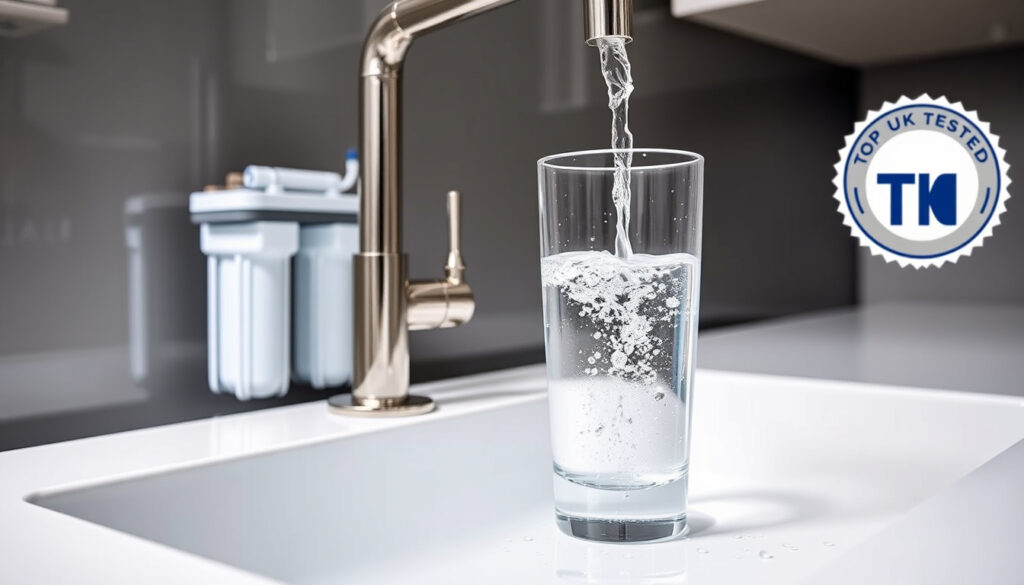
Reverse Osmosis Water Filter – Best UK Picks Tested
Reverse osmosis water filters have become an essential tool for households seeking cleaner, purer drinking water. Unlike standard filtration methods, these systems use a semi-permeable membrane to remove up to 99% of contaminants, including lead, fluoride, microplastics, and dissolved solids. For UK consumers navigating hard water challenges and growing water quality concerns, understanding how these systems work—and which models deliver on their promises—has never been more important.
This guide examines the science behind reverse osmosis, compares the leading UK options, and answers the most common questions consumers have when considering an upgrade to their home water filtration setup.
Best Reverse Osmosis Water Filters in the UK
When selecting a reverse osmosis water filter, certification and independent testing matter more than marketing claims. The most reliable systems carry NSF/ANSI certifications, which verify performance against established health and aesthetic standards.
Membrane-based purification using semi-permeable technology
Removes over 200 contaminants including chlorine, lead, and microplastics
AquaTru Carafe and Waterdrop RO lead independent lab tests
Drinking and cooking water where maximum purity is desired
Key Insights on Reverse Osmosis Filters
- NSF/ANSI 58 certification specifically tests RO membrane performance and rejection rates
- AquaTru Carafe achieved the highest overall lab score of 9.57/10, with a 9.91/10 purity rating
- Waterdrop offers an 8-stage system with a 2:1 pure-to-waste ratio, saving 800% more water than traditional 1:4 systems
- Countertop RO units have emerged as the preferred choice for UK homes, avoiding complex plumbing installation
- True reverse osmosis requires sufficient water pressure and a dedicated membrane—features incompatible with simple jug designs
- User reviews consistently highlight improved taste and reduced chlorine as immediate benefits after switching to RO
Top NSF-Certified RO Systems for UK Consumers
| Model | Certifications | Key Features | Lab Score / Reviews | UK Availability |
|---|---|---|---|---|
| AquaTru Carafe | NSF/ANSI 42, 53, 58, 401 | Countertop, tankless, highest contaminant removal | 9.57/10 overall; 9.91/10 purity | aquatru.co.uk |
| Waterdrop RO | NSF/ANSI 42, 58, 372 | Tankless, 8-stage, 99% lead removal, 2:1 ratio | 4.7+ stars | waterdropfilter.co.uk |
| AquaTru Classic | NSF/ANSI 42, 53, 58, 401 | Similar to Carafe, strong lab reduction scores | 9.91/10 purity | aquatru.co.uk |
| Hommix RO | Not specified | Rigorous pollutant removal | No ratings available | hommix.co.uk |
| UK-Water-Filters RO | Not specified | Removes 200+ contaminants | No ratings; £1.96/week financing | uk-water-filters.co.uk |
AquaTru leads comparisons due to independent lab data and full certifications across health and aesthetic standards. Waterdrop excels in water savings and UK-specific marketing. When comparing options, look for specific NSF/ANSI numbers rather than vague claims of certification.
Types of Reverse Osmosis Water Filters: Jugs, Machines, Taps and More
Understanding the different form factors available helps consumers make informed decisions about which system fits their kitchen and lifestyle.
Countertop RO Systems
Countertop units like the AquaTru Carafe have become the dominant choice for UK households. These systems sit on your worktop, connect to your tap via a diverter, and require no plumbing modifications. The tankless design saves valuable kitchen space while still delivering filtered water on demand. Independent testing confirms these units achieve superior contaminant removal compared to under-sink alternatives in typical UK home conditions.
Under-Sink RO Systems
Under-sink units install beneath your kitchen cabinet and connect directly to your plumbing. Brands like Hommix and UK-Water-Filters offer these systems, which typically provide higher flow rates but require professional installation. The trade-off involves more complex setup but potentially lower long-term maintenance costs.
The Jug Question
Standard water filter jugs—such as those from Brita—do not use reverse osmosis technology. True RO requires pressure to push water through a semi-permeable membrane with pores measuring approximately 0.0001 microns. Simple gravity-fed jugs cannot generate this pressure, meaning they cannot achieve the same contaminant removal rates. Consumers seeking genuine RO performance should look beyond traditional jug-style filters.
Tap-Mounted and Diverted Systems
While some manufacturers offer tap-mounted RO options, these remain relatively rare in the UK market. Most RO systems fall into either countertop or under-sink categories. Tap diverters exist but often sacrifice the full filtration capability that countertop units provide. For verified RO performance, countertop systems offer the most reliable path to certified water quality.
No dedicated reverse osmosis units appear in Screwfix listings—the retailer focuses on plumbing tools and basic filtration accessories rather than branded RO systems. For certified RO filters, specialist water filtration retailers and direct manufacturer websites provide more comprehensive options.
Key Differences at a Glance
- Countertop: Easy install, no plumbing, verified performance, suits most UK homes
- Under-sink: Higher flow rate, hidden installation, professional setup recommended
- Jug-style: Not true RO, limited to basic carbon filtration
- Tap-mounted: Rare, often compromises on filtration quality
How Does a Reverse Osmosis Water Filter Work?
Reverse osmosis operates on a straightforward scientific principle: water naturally moves through a semi-permeable membrane from an area of lower solute concentration to higher concentration. RO reverses this natural process by applying pressure to force water through the membrane while leaving contaminants behind.
The Four-Stage Filtration Process
Standard RO systems employ a multi-stage approach to achieve comprehensive purification. Each stage addresses different contaminant types, ensuring the final output meets rigorous purity standards.
- Stage 1 — Mechanical pre-filter: A sediment filter removes visible particles, rust, and debris from incoming water. This protects subsequent stages from clogging and extends membrane life.
- Stage 2 — Carbon filter: Activated carbon reduces chlorine, chloramine, and chemical odors that affect taste and smell. This stage also removes organic compounds that could damage the RO membrane.
- Stage 3 — RO membrane: The heart of the system uses a semi-permeable membrane with pores measuring 0.0001 microns. This barrier eliminates dissolved solids, heavy metals, fluoride, lead, and microplastics. Most membranes achieve 95-99% rejection rates for targeted contaminants.
- Stage 4 — Post-carbon polish: A final activated carbon stage improves taste and removes any remaining trace odors, delivering clean, refreshing output.
Water Efficiency Considerations
Traditional RO systems typically produce one gallon of purified water for every four gallons of feed water—a 1:4 pure-to-waste ratio. Newer designs like Waterdrop’s 8-stage system achieve a 2:1 ratio, meaning two parts purified water for every one part waste. This represents an 800% improvement in water efficiency, making modern RO systems more environmentally responsible and cost-effective to operate.
RO systems require adequate water pressure to function effectively. UK homes with very low mains pressure may experience reduced output or slower fill times. AquaTru’s countertop design includes its own pressure system, making it suitable for properties where standard water pressure might limit performance.
What Reverse Osmosis Definitely Removes vs Common Myths
| Established removal capability | Common claims requiring scrutiny |
|---|---|
| Lead, mercury, cadmium, chromium | Some mineral removal may affect taste balance |
| Fluoride and arsenic | Installation complexity varies significantly between models |
| Chlorine, chloramine, THMs | Maintenance schedules differ; not all require same filter changes |
| Microplastics and microfibers | Waste water ratio depends on specific system design |
| Total dissolved solids (TDS) | NSF certification coverage varies by standard number |
Evolution of Reverse Osmosis Filters
Understanding the development trajectory of RO technology helps contextualise current options and future direction.
- 1950s: Scientists develop the first practical RO membranes for desalination applications, primarily for military and industrial use.
- 1970s-80s: Residential RO systems emerge in the United States, with early models requiring complex plumbing and large storage tanks.
- 2000s: Compact designs and improved membrane technology make RO more accessible for home use globally.
- 2020s: Tankless designs eliminate storage tanks, reduce footprint, and improve water freshness. Waterdrop’s 8-stage system and AquaTru’s patented 4-stage process represent current UK market leaders.
- 2024-2026: UK adoption increases as consumers become more aware of water quality issues and independent testing verifies manufacturer claims. NSF certification becomes a standard expectation rather than a marketing bonus.
Current trends point toward even more efficient water usage, smart monitoring via app integration, and broader certification coverage. Tankless designs have already eliminated the need for storage tanks, and manufacturers now compete on waste-water ratios and multi-stage polishing capabilities.
Expert Sources and Credibility Assessment
Evaluating claims about water filtration requires examining both manufacturer data and independent verification. Several sources provide varying perspectives on RO system performance.
AquaTru improved water quality more than any other system tested. The independent lab scores confirm what users report—an noticeable improvement in taste and clarity. For those seeking to improve their home’s water quality, The Range East Kilbride offers a comprehensive guide to the best reverse osmosis systems available in the UK.
Customers consistently highlight instruction quality, flavor improvement, easy installation, and value as primary benefits of Waterdrop systems.
The Wikipedia overview of reverse osmosis provides foundational scientific context, while the US Environmental Protection Agency offers authoritative technical details on membrane performance and application standards.
Always verify specific NSF/ANSI standard numbers when comparing products. NSF/ANSI 58 covers RO membrane performance specifically, while 42 addresses aesthetic effects (taste and odor), 53 covers health effects, and 401 addresses emerging contaminants. AquaTru’s comprehensive coverage across multiple standards provides more complete verification than systems certified to fewer standards.
Reverse Osmosis in the UK Context
UK households face particular water quality challenges that make RO systems increasingly relevant. Hard water—common across much of England—contains elevated mineral deposits that affect both plumbing and taste. While not a health concern in most cases, these minerals can accumulate in appliances and create mineral taste in drinks.
The How Much Water to Drink a Day Calculator provides useful context for understanding daily hydration needs, which becomes relevant when evaluating filter output quality and quantity requirements.
UK-specific availability through retailers like Amazon, specialist filtration sites, and direct manufacturer channels means consumers have access to the same certified systems available internationally. Waterdrop has specifically marketed toward UK customers with appropriate voltage and fitting information. AquaTru’s countertop design accommodates UK kitchen sizes without requiring under-sink installation.
Interestingly, cultural references to water quality appear even in popular entertainment. The film Avatar The Way of Water explores themes of water as a vital resource, resonating with viewers increasingly concerned about their own water quality at home.
Summary: Making an Informed RO Decision
Reverse osmosis water filters represent the most effective residential water purification technology currently available to UK consumers. The science is established, the certification standards are rigorous, and independent testing confirms that leading products deliver genuine contaminant removal.
For most UK households, countertop RO systems like the AquaTru Carafe offer the best combination of verified performance, installation simplicity, and space efficiency. Waterdrop’s 8-stage system provides an alternative for those prioritising water efficiency and UK-specific support. Both options carry NSF/ANSI certifications that independent testing has validated.
Avoid jug-style filters claiming RO capability—true reverse osmosis requires pressure and membrane technology incompatible with simple gravity designs. Similarly, while under-sink systems offer higher flow rates, countertop units avoid plumbing complications and still achieve superior overall contaminant removal according to lab testing.
Frequently Asked Questions
Can a standard water jug use reverse osmosis technology?
No. True reverse osmosis requires water pressure to force water through a semi-permeable membrane. Simple gravity-fed jugs cannot generate this pressure and rely on basic carbon filtration instead. This limits their contaminant removal to larger particles and chemicals affecting taste rather than dissolved solids and heavy metals.
How often do RO filters need replacement?
Pre-filters and carbon stages typically require replacement every 6-12 months depending on usage and water quality. RO membranes generally last 2-3 years. AquaTru and Waterdrop provide specific guidance for their respective systems, with usage monitoring helping to optimise replacement schedules.
What does NSF/ANSI certification mean for RO systems?
NSF/ANSI standards provide independent verification of product performance. NSF/ANSI 58 specifically tests RO membrane rejection rates, while 42 covers aesthetic effects, 53 addresses health effects, and 401 addresses emerging contaminants. Products displaying these numbers have been independently tested and verified to perform as claimed.
Do RO systems remove healthy minerals from water?
RO systems remove most dissolved solids, including some minerals. However, most consumers obtain essential minerals primarily from food rather than water. Some systems offer re-mineralisation stages to restore beneficial minerals after filtration, though the health impact of mineral removal from drinking water remains debated among nutrition experts.
How much water does a reverse osmosis system waste?
Traditional RO systems typically waste 3-4 gallons for every gallon purified (1:4 ratio). Modern systems like Waterdrop achieve 2:1 ratios, producing two gallons of purified water for every gallon of waste. AquaTru’s design also prioritises efficiency, making contemporary systems significantly more water-efficient than earlier models.
Are countertop RO systems suitable for small UK kitchens?
Yes. Tankless countertop designs occupy minimal counter space and do not require under-sink installation or cabinet modification. AquaTru’s Carafe and similar models specifically target consumers seeking filtered water without the footprint of traditional filtration setups.
Can RO systems handle UK hard water?
RO systems process hard water effectively, with pre-filters addressing sediment and the membrane handling dissolved minerals. However, extremely hard water may require more frequent pre-filter changes. The multi-stage design ensures consistent output regardless of incoming water hardness within normal UK parameters.
More related posts
 Who Is Dan Edgar Dating – Chloe Lewis Confirmed
 Fourth Wing TV Show – Prime Video Adaptation Guide and Updates
 Le Cordon Bleu London – Practical Guide to Courses and Fees
 The Last of Us Show – Cast, Seasons and Key Details
 The Walking Dead: Daryl Dixon – Complete Guide to Sea on , Ca t and Streaming
 Nike Pro Shorts Girls – Size Chart, Volleyball Reviews 2025
 Hop On Hop Off London – Best Bus Tours Compared for 2026
 Shai Gilgeous-Alexander – Stats Bio Contract Highlights