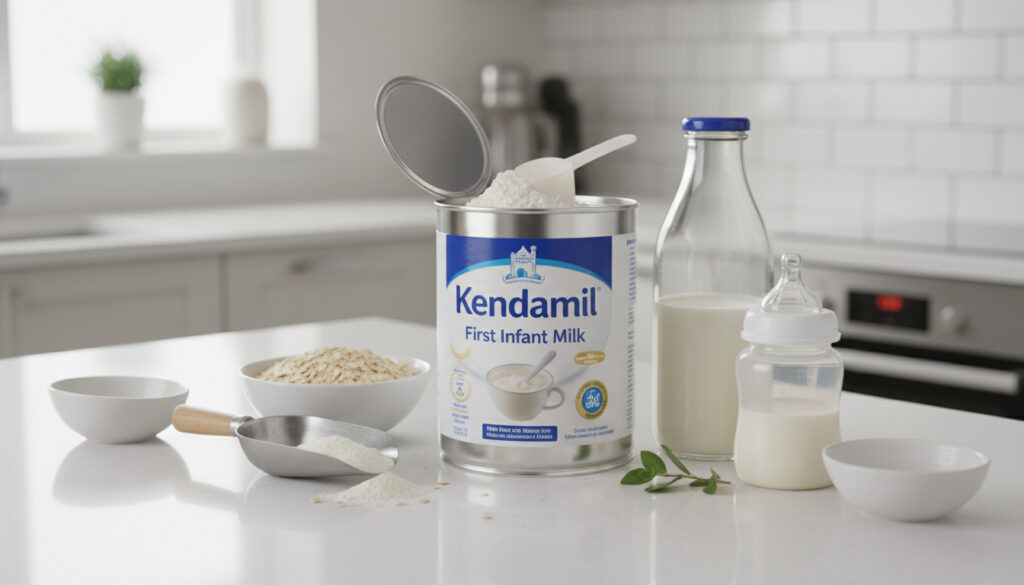
Kendamil First Infant Milk – Ingredients, Preparation & Reviews
Kendamil First Infant Milk Stage 1 represents a distinct approach to early infant nutrition, utilizing whole cow’s milk as its primary ingredient rather than the skimmed milk powders common in conventional formula production. Designed specifically for newborns from birth through six months, this British-manufactured product emphasizes a whey-to-casein ratio that mimics breast milk composition while excluding palm oil, soy, and fish oils entirely.
Available in both Classic and certified Organic variants, the formula incorporates milk fat globule membrane (MFGM) naturally present in whole milk, alongside plant-derived DHA and ARA fatty acids. The formulation excludes corn syrup, starch, and maltodextrin, relying instead on lactose as the sole carbohydrate source.
This examination assesses the product’s ingredient profile, preparation protocols, safety credentials, and comparative positioning within the infant formula market, drawing exclusively from manufacturer specifications, retailer documentation, and aggregated user experiences.
What is Kendamil First Infant Milk?
Birth to 6 months
100% Whole cow’s milk
Organic option available; Palm oil free; Vegetarian/Kosher/Halal (Organic variant)
800g tins; Approximately 62 x 100ml feeds
Retailer documentation indicates several distinguishing characteristics that define this product’s market position:
- Whole milk base provides natural MFGM associated with cognitive and immune support
- 60:40 whey-to-casein ratio aligns with breast milk protein distribution
- Zero palm oil, soy, or fish oil content across both variants
- Plant-based DHA and ARA derived from marine algae rather than fish sources
- Prebiotics (GOS) and human milk oligosaccharides (3’GL in Organic) support gut microbiome development
- Manufactured in Britain utilizing grass-fed cow’s milk
- Exclusion of corn syrup, starch, or maltodextrin fillers
| Feature | Specification |
|---|---|
| Suitable from | Birth |
| Age range | 0-6 months |
| Milk base | Whole cow’s milk (organic or conventional) |
| Protein ratio | 60:40 whey:casein |
| Primary fat source | Milk fat + vegetable oils (sunflower, coconut, rapeseed) |
| DHA source | Marine algae (plant-based) |
| Carbohydrate | Lactose only |
| Palm oil | None |
| Allergens | Milk, lactose |
| Standard tin size | 800g |
According to product specifications, the Classic variant contains 107g of whole milk per 100g of powder, while the Organic variant provides 147g liquid milk equivalent per 100g powder using certified organic dairy sources.
Key Ingredients and Nutritional Profile
Whole Milk Foundation
Unlike conventional formulas that rely on skimmed milk powders supplemented with vegetable oil blends, Kendamil utilizes 100% whole cow’s milk as its nutritional foundation. This approach preserves natural milk fat globule membrane (MFGM), a component typically removed during skim milk production. Manufacturer data indicates MFGM contains bioactive lipids and proteins potentially supporting cognitive development and immune function.
Protein Composition
The formulation maintains a 60:40 whey-to-casein ratio, mirroring the protein distribution found in mature breast milk. Classic Stage 1 incorporates demineralised whey powder enriched with alpha-lactalbumin, while the Organic variant utilizes organic whey protein. Technical documentation confirms both variants provide 10.8g protein per 100g powder in the Organic version, with approximately 6.7g whey and 4.1g casein.
The 60:40 whey-to-casein ratio aligns with the protein distribution found in mature breast milk, potentially reducing digestive strain compared to casein-dominant formulations. This specific balance aims to minimize gastric discomfort while supporting adequate amino acid availability for rapid infant growth phases.
Lipid Architecture
Fat composition combines natural milk fats with organic vegetable oils including sunflower, coconut, and rapeseed. Organic variant specifications list 26.6g fat per 100g powder, with 11g saturates. The complete absence of palm oil distinguishes this formula from industry standards, while the inclusion of plant-based DHA and ARA eliminates fish oil derivatives.
Prebiotics and HMOs
Both variants incorporate galacto-oligosaccharides (GOS) derived from milk, functioning as prebiotic fiber. The Organic variant additionally contains 0.07g of 3′-galactosyllactose (3’GL) per 100g, a human milk oligosaccharide supporting gut microbiome establishment. Total prebiotic fiber reaches 1.8g per 100g in the Organic formula.
Micronutrients
Nutritional profiles include comprehensive vitamin and mineral supplementation. Organic Stage 1 provides 420mg calcium, 5.3mg iron, and 3.9mg zinc per 100g powder. Additional components include taurine (40mg), nucleotides (20mg), choline, inositol, and L-carnitine supporting metabolic and neurological functions.
How to Prepare Kendamil First Infant Milk
Mixing Protocols
Standard preparation requires precise measurement: 12.9g powder combined with 90ml boiled and cooled water yields 100ml finished feed. This equates to one level scoop per 30ml water. Preparation guidelines emphasize using the provided scoop and leveling powder without compaction.
Safety Precautions
Water must be boiled and allowed to cool before mixing. Reboiling water or storing prepared formula beyond two hours at room temperature risks bacterial contamination. Each feed requires fresh preparation; manufacturers caution against reheating or storing mixed formula for later consumption.
Storage Guidelines
Unopened powder tins require cool, dry storage. Once opened, standard hygienic practice suggests use within four weeks. Prepared bottles demand immediate consumption or refrigeration according to pediatric feeding guidelines, though manufacturer specifications emphasize the two-hour room temperature limit for safety.
Kendamil First Infant Milk Reviews and Comparisons
Parent Feedback
Aggregated user experiences indicate parents frequently cite the formula’s creamy texture and mild flavor profile as factors facilitating infant acceptance. Multiple reviewers note reduced constipation incidents compared to previous formulas used, attributing this to the whole milk base and absence of palm oil. Reports consistently highlight the digestibility of the 60:40 protein ratio and the ethical sourcing credentials.
Comparison with Aptamil Organic
While both brands offer palm oil-free or sustainable palm options and utilize 60:40 whey-to-casein ratios, distinct formulation differences emerge. Kendamil relies entirely on whole milk fats, whereas Aptamil Organic typically employs skimmed milk with added vegetable oil blends. Kendamil explicitly excludes all palm oil derivatives, while Aptamil may incorporate certified sustainable palm oil in some variants.
Unlike Aptamil Organic which frequently utilizes skimmed milk supplemented with vegetable oil blends, Kendamil retains natural milk fats throughout production. This approach eliminates the need for palm oil entirely while preserving milk fat globule membrane components that may support neurological development.
Both Classic and Organic variants contain cow’s milk protein and lactose. Parents should consult pediatricians before use if infants display suspected dairy intolerance, reflux, or family history of milk protein allergy. The formula is not suitable for infants with diagnosed galactosemia.
The Organic First Infant Milk variant specifically targets parents seeking certified organic ingredients with vegetarian, Kosher, and Halal approvals, while the Classic version offers the whole milk benefits without organic certification costs.
Development and Formulation Milestones
The evolution of this product line reflects shifting industry standards toward cleaner label infant nutrition:
- Whole Milk Innovation: Formulation utilizing unskimmed cow’s milk as primary base ingredient, preserving natural fat structure (Source: Manufacturer specifications)
- Organic Certification: Bio Nature/Organic variant achieving EU organic standards for dairy and agricultural ingredients (Source: Organic certification documentation)
- Palm Oil Elimination: Industry-leading removal of palm oil derivatives from standard infant formula production (Source: Ingredient declarations)
- Plant-Based DHA Transition: Replacement of fish oil with marine algae-derived omega-3 fatty acids (Source: Nutritional profiles)
- Healthcare Professional Launch: Distribution through UK healthcare channels and pharmacies (Source: Professional healthcare portal)
Verified Safety and Outstanding Questions
Established Information
- Suitable from birth as complete breast milk substitute or supplement
- 60:40 whey-to-casein ratio verified through formulation analysis
- Zero palm oil, soy protein, or fish oil content confirmed
- Organic certification valid for Bio Nature variant
- Vegetarian, Kosher, and Halal status verified for Organic version
Information Not Publicly Detailed
- Specific calendar date of original Classic formula market launch
- Independent longitudinal clinical trials comparing developmental outcomes specifically against skimmed-milk competitors
- Detailed retail pricing structures across all UK supermarket chains
- Comparative bioavailability studies of naturally occurring vs. supplemented MFGM
Market Context and Manufacturing Philosophy
Kendamil’s production in the Lake District utilizes milk from British grass-fed cows, contrasting with formulas relying on imported dairy commodities. The whole milk approach responds to parental demand for less processed infant nutrition, avoiding the industrial standard of removing milk fats only to replace them with vegetable oil emulsifiers.
This manufacturing philosophy positions the brand within the “clean label” movement, emphasizing recognizable ingredients and exclusion of environmentally contentious components like palm oil. The retention of natural milk fats potentially offers nutritional advantages through MFGM preservation, though specific comparative efficacy data remains proprietary.
Documented Experiences and Expert Perspectives
Parents praise creamy texture, mild flavor babies accept easily, specifically noting the absence of palm oil and whole milk benefits. Digestibility ranks highly in feedback, with multiple reports of reduced constipation compared to previous formulas.
— Aggregated user reviews, Organic Formula Hub
The 60:40 whey-to-casein ratio supports newborn digestion while the whole milk base provides eco-friendly energy through naturally occurring fats rather than imported vegetable oil blends.
— Product analysis, Mommy Formula
Assessment and Considerations
Kendamil First Infant Milk Stage 1 offers a whole-milk-based alternative to conventional skimmed-milk formulas, emphasizing natural milk fat components, palm-free production, and plant-derived nutrients. With both Classic First Infant Milk and organic-certified variants available, the product suits parents seeking British-manufactured infant nutrition without soy, fish oils, or palm derivatives. Consultation with pediatric providers remains essential for infants with suspected allergies or specialized nutritional requirements.
Common Questions
Can I switch to Kendamil First Infant Milk from another brand?
Transitioning between formulas requires gradual introduction over several days to monitor tolerance. Consult a pediatrician before switching, particularly if your infant has existing digestive sensitivities or allergies.
What distinguishes the Classic and Organic versions?
Both use whole milk bases and exclude palm oil. The Organic variant utilizes certified organic ingredients, includes the HMO 3’GL, and carries vegetarian, Kosher, and Halal certifications.
Does this formula contain fish oil?
No. Both variants use marine algae as the DHA and ARA source, making the Organic version entirely plant-based and suitable for vegetarian diets.
How should I store prepared formula?
Prepare feeds fresh for each meal. Do not store made formula at room temperature for more than two hours. Discard any unused prepared formula rather than reheating.
Is Kendamil suitable for infants with reflux?
While the 60:40 whey-to-casein ratio may aid digestion, infants with diagnosed reflux require individualized medical assessment. Standard formula changes alone rarely resolve pathological reflux.
What is the shelf life of an opened tin?
Opened tins typically require use within four weeks. Store unopened containers in cool, dry conditions away from direct sunlight to preserve nutritional integrity.
More related posts
 How Much Water to Drink a Day Calculator – By Weight and Activity
 Houses for Sale Airdrie – Complete 2025 Guide with Prices and Tips
 Hiking Shoes 2025 – Expert Tested Picks for Men and Women
 Do Not Stand at My Grave and Weep – Full Poem, Meaning & Author
 Amber Heard Elon Musk – Relationship Timeline, Breakup and Allegations
 DVLA Contact Number Free 0300 – Helplines, Costs, Hours
 Plymouth Argyle vs Liverpool – Stunning FA Cup Giant-Killing
 The Essex Golf Club – Green Fees, Membership & Course Guide