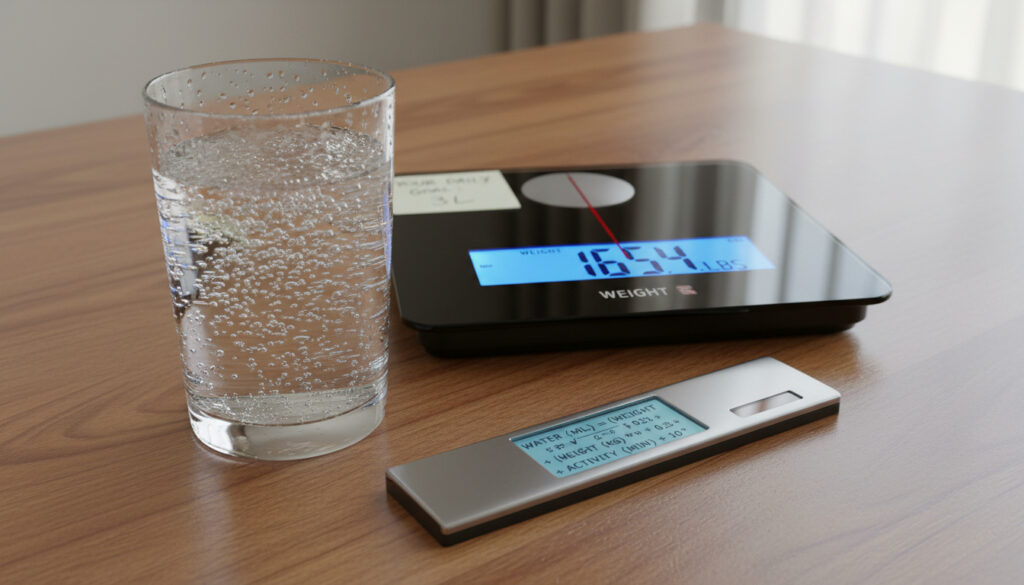
How Much Water to Drink a Day Calculator – By Weight and Activity
Determining your daily water needs requires more than following outdated rules of thumb. While many adults grew up hearing the “eight glasses a day” recommendation, modern medical guidelines emphasize individualized calculations based on body weight, activity level, age, and physiological status.
Current research indicates that baseline requirements vary significantly between a sedentary office worker and an athlete training in heat, or between a 120-pound woman and a 200-pound man. Understanding these variables helps prevent both the performance decline associated with mild dehydration and the risks of overconsumption.
This guide examines evidence-based methods for calculating personal hydration targets, including weight-based formulas, activity adjustments, and special considerations for pregnancy and exercise.
How Much Water Should You Drink a Day?
Medical institutions have moved away from universal prescriptions toward adaptive benchmarks. According to the Mayo Clinic, average healthy men require approximately 15.5 cups (3.7 liters) of total fluids daily, while women need about 11.5 cups (2.7 liters). These totals include all beverages and food moisture, not just plain water.
Adult Men
Base: 3.7 liters (15.5 cups) total fluid
Source: Adequate Intake standards for ages 19+
Adult Women
Base: 2.7 liters (11.5 cups) total fluid
Source: Adequate Intake standards for ages 19+
Children & Teens
Base: 2.1–3.3 liters depending on age and gender
Peak: Teenage boys approach adult male requirements
Athletes
Addition: +12 oz per 30 minutes activity
Heat: Up to 1 liter extra per hour
Several key principles emerge from current hydration science:
- The eight-glass rule lacks evidence. Medical consensus considers this guideline outdated, as it ignores body size and metabolic variation.
- Weight provides the most reliable baseline. Dividing body weight in pounds by two yields daily ounces requirements for many adults.
- Body composition matters. Muscle tissue contains significantly more water than adipose tissue, meaning leaner individuals require more fluid per pound.
- Age adjusts the baseline. Requirements increase through adolescence then stabilize, with adults over 50 maintaining the same Adequate Intake as younger adults.
- Pregnancy demands measurable increases. Gestational states require 0.3 to 0.7 liters additional fluid daily.
- Environmental temperature elevates needs. Warm weather and high altitudes increase insensible water loss through sweat and respiration.
- Food contributes substantially. Fruits, vegetables, and wet foods provide approximately 20 percent of daily fluid intake.
| Demographic Factor | Base Daily Amount | Adjustment Criteria |
|---|---|---|
| Body Weight (Standard Formula) | Weight (lbs) ÷ 2 = ounces needed | +20% for high muscle mass |
| Female Adults (19–50) | 2.7 liters / 11.5 cups | +0.3 liters during pregnancy |
| Male Adults (19–50) | 3.7 liters / 15.5 cups | Baseline remains stable |
| Adolescents (14–18) | 2.3L (F) / 3.3L (M) | Increases during growth spurts |
| Exercise (30 minutes) | Add 12 ounces | Heat/altitude: +0.5–1L per hour |
| Breastfeeding Women | Baseline + 0.7–1.1 liters | Varies by milk production volume |
| High-Altitude Exposure | Baseline | +0.5–1L per hour intense activity |
| High-Sodium or High-Protein Diet | Baseline | +500ml to maintain balance |
How to Use a Daily Water Intake Calculator
Digital calculators simplify the arithmetic of hydration planning by processing multiple variables simultaneously. Most tools require inputs including age, weight, activity duration, and environmental conditions to generate personalized recommendations.
Step-by-Step Calculation Methods
The weight-based formula remains the most accessible manual calculation. To apply this method, divide your body weight in pounds by two to determine your baseline ounces requirement. For example, a 180-pound individual requires approximately 90 fluid ounces (2.7 liters), while a 200-pound adult needs roughly 100 ounces.
After establishing this baseline, adjust for activity by adding 12 ounces for every 30 minutes of daily exercise. Climate considerations require additional increases during warmer months when sweating rates elevate insensible losses.
Input Variables That Change Results
Calculator accuracy depends on honest assessment of lifestyle factors. High-protein or high-sodium diets necessitate extra fluids to maintain renal filtration and cellular homeostasis. Conversely, certain medical conditions including heart failure or kidney disease may require physicians to limit fluid intake below standard calculations.
For quick estimation without digital tools, remember that larger bodies require more water due to greater blood volume and higher daily energy expenditure. This formula provides a starting point that typically requires upward adjustment for active individuals.
Factors That Influence Your Water Needs
Static recommendations fail to capture the dynamic nature of human hydration. Biological sex, metabolic demands, and temporary physiological states all modify baseline requirements.
Exercise and Physical Activity
Physical exertion increases water needs through thermoregulatory sweating and increased respiratory losses. Standard recommendations suggest adding 12 ounces of water for every 30 minutes of daily activity, with intense training in heat or high altitude potentially requiring an additional 0.5 to 1 liter per hour. During heavy sweating, electrolyte tablets help prevent cramping by replacing sodium and potassium alongside fluid.
Body Composition and Weight Management
Studies indicate that drinking water supports weight loss efforts through multiple mechanisms. Water consumption increases metabolism, reduces appetite, and enhances fat oxidation. Replacing sugar-sweetened beverages with water eliminates caloric intake while maintaining hydration. However, water intake represents just one component of weight management, requiring coordination with nutrition, exercise, and sleep hygiene.
Drinking water before meals may increase feelings of fullness and reduce overall calorie consumption. This strategy works best when combined with proper meal timing rather than viewed as an isolated solution.
Pregnancy and Breastfeeding Adjustments
Gestational and lactating states demand increased fluid intake to support fetal circulation and milk production. Pregnant women require approximately 0.3 liters additional fluid daily above baseline needs. Breastfeeding women face higher requirements, needing an additional 0.7 to 1.1 liters per day to support milk synthesis. Some guidelines suggest increases of 24 to 32 ounces depending on maternal body weight. Proper infant nutrition, whether through breast milk or formulas like Kendamil First Infant Milk – Ingredients, Preparation & Reviews, depends on adequate maternal hydration.
Signs of Dehydration and Overhydration Risks
Monitoring hydration status requires attention to physiological signals and awareness of potentially dangerous excess.
Early Warning Signs of Dehydration
Your body signals insufficient fluid status through specific identifiable markers. Thirst, dry mouth sensations, and dark yellow urine indicate emerging dehydration. Proper hydration supports critical functions including joint lubrication, cognitive performance, and metabolic efficiency. Even mild deficits impair concentration and physical endurance.
Individuals with heart failure or kidney disease may require medically supervised fluid restriction. These patients should not follow standard calculator recommendations without physician consultation.
When Hydration Becomes Harmful
Overhydration presents distinct though less common risks than dehydration. Drinking water beyond renal excretion capacity dilutes blood sodium concentrations, potentially causing hyponatremia. While specific thresholds vary by individual and condition, athletes and military personnel consuming excessive plain water during prolonged exercise represent the highest-risk demographic. Women monitoring reproductive health should note that various conditions, including Pelvic Inflammatory Disease Symptoms – Early Signs and Pain, may present with symptoms confused with dehydration, requiring differential diagnosis.
Daily Hydration Timeline
Strategic distribution of fluid intake throughout the day optimizes physiological function better than consuming large volumes at once.
- Morning: Address overnight fluid losses immediately upon waking through 16–20 ounces of water.
- Pre-meal: Consume fluids 30 minutes before eating to support digestion without diluting stomach acids during meals.
- During Exercise: Consume 7–10 ounces every 10–20 minutes during sustained physical activity, adjusting for heat and intensity.
- Post-exercise: Replace sweat losses by drinking 16–24 ounces for every pound of body weight lost during activity.
- Evening: Taper fluid consumption two hours before sleep to minimize nocturnal disturbances.
Established Facts vs. Persistent Myths
Distinguishing verified medical consensus from popular misconceptions helps avoid both inadequate intake and unnecessary anxiety.
| Scientifically Established | Remains Uncertain or Variable |
|---|---|
| Adequate Intake standards specify 2.7L for women and 3.7L for men ages 19–50 | Precise individual variance within demographic groups |
| Weight-based formulas (body weight ÷ 2 in ounces) provide valid baselines for healthy adults | Optimal timing regarding circadian rhythms for specific individuals |
| Pregnancy requires +0.3L minimum; breastfeeding requires +0.7–1.1L | Exact thresholds for overhydration in healthy adults without underlying conditions |
| Activity increases needs by measurable amounts (12 oz per 30 min baseline) | Calculator accuracy for specific ethnic groups or very high muscle-mass individuals |
| Caffeinated beverages contribute to hydration but less effectively than water | Whether morning water consumption provides unique metabolic advantages over other times |
The Science Behind Personal Hydration Needs
Water constitutes approximately 60 percent of adult body mass, serving as the medium for cellular transport, temperature regulation, and waste elimination. Blood plasma, muscle tissue, and organ systems require constant fluid balance to maintain homeostasis.
Research demonstrates that larger individuals require proportionally more fluid to maintain blood volume and support metabolic processes. Additionally, lean muscle tissue contains approximately 73 percent water compared to lower percentages in adipose tissue, explaining why body composition affects requirements independently of total weight.
Environmental factors modify these needs seasonally. High ambient temperatures increase sweat rates, while high altitudes elevate respiratory water loss and urine output during acclimatization periods.
Medical Authority and Research Sources
“The average healthy adult should aim for approximately 11.5 to 15.5 cups (2.7 to 3.7 liters) of total fluid daily.”
— Mayo Clinic, Hydration Guidelines
“Bigger bodies require more water because they have greater blood volume, higher daily energy expenditure, and more surface area losing water through sweat and evaporation.”
— Exercise Physiology Research
Final Recommendations for Daily Hydration
Calculate your baseline using the weight-based formula, then adjust for activity, climate, and physiological status. Use symptoms like urine color and thirst as real-time biofeedback, and consult healthcare providers before applying standard calculations to conditions involving heart, kidney, or endocrine disorders. Remember that while Kendamil First Infant Milk – Ingredients, Preparation & Reviews addresses infant nutrition, adult hydration requires personalized attention to the factors outlined above.
Common Questions About Water Intake Calculators
Does coffee count toward daily water intake?
Yes, though less effectively than plain water. Caffeinated beverages like coffee and tea contribute to total fluid intake but don’t hydrate as efficiently as water alone.
Do hydration needs change after age 50?
No, Adequate Intake standards remain constant at 2.7 liters for women and 3.7 liters for men from ages 19 through 50 and beyond.
How much additional water is needed at high altitudes?
During intense training at altitude, you may need an extra 0.5 to 1 liter per hour of activity to compensate for increased respiratory and urinary losses.
Can you get enough water from food alone?
No. While wet foods like fruits and vegetables contribute up to 20 percent of daily fluid needs, the remaining 80 percent typically requires direct beverage consumption.
What is the simplest manual calculation for water needs?
Divide your body weight in pounds by two to get your baseline daily ounces requirement. For example, 160 pounds equals 80 ounces.
More related posts
 Candy Brothers – Net Worth, One Hyde Park, and Business 2025
 Bangladesh vs India Cricket Timeline – Head-to-Head Records 1988-2025
 How to Stop Snoring Immediately – Proven Fixes for Tonight
 Gatwick North Terminal Drop Off – Location, Fees and Payment Guide
 Janice Dickinson – Alive, Age, Net Worth and Husband in 2025
 Place in the Sun Presenters – Where Are They Now 2025
 His Majesty’s Theatre London – Seating Plan, Phantom Tickets & Guide
 Do Not Stand at My Grave and Weep – Full Poem, Meaning & Author