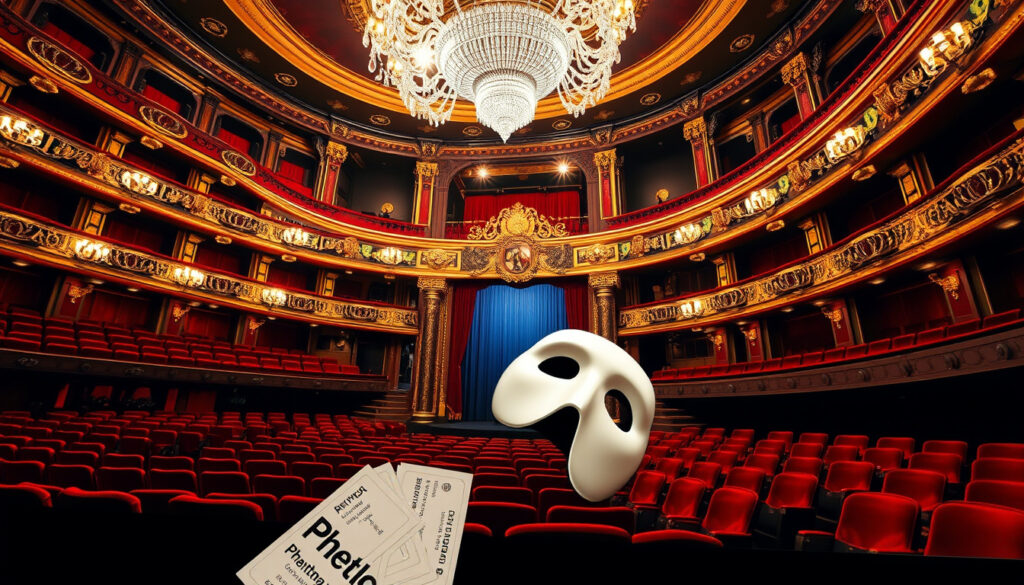
His Majesty’s Theatre London – Seating Plan, Phantom Tickets & Guide
His Majesty’s Theatre stands as one of London’s most distinguished West End venues, a Grade II-listed auditorium that has anchored the Haymarket cultural corridor for generations. Currently hosting Andrew Lloyd Webber’s legendary production, the theatre offers audiences an intimate setting with seating for approximately 1,232 guests across four distinct levels.
For theatregoers planning a visit, understanding the venue’s layout, ticketing options, and surrounding amenities can significantly enhance the overall experience. This guide consolidates essential information about the theatre’s history, seating configurations, and practical considerations for first-time and returning visitors alike.
Whether you’re seeking the optimal seats for witnessing the famous chandelier sequence or navigating public transport to reach Haymarket, comprehensive knowledge of the venue ensures a seamless theatrical outing in the heart of London’s entertainment district.
What is the seating plan and view from seats at His Majesty’s Theatre London?
Key Insights on His Majesty’s Theatre
- Historic West End venue with roots dating back to its establishment era, now operating under the royal naming tradition established by King Charles III since May 2023
- Home to Andrew Lloyd Webber’s The Phantom of the Opera since 1986, making it the longest-running production in the theatre’s history
- Optimal viewing experiences concentrated in the Stalls and Royal Circle sections, with central rows offering unobstructed sightlines to the stage and chandelier
- Upper tiers (Grand Circle and Balcony) present varying degrees of obstruction from pillars, rails, and overhangs that may affect visibility of certain stage elements
- Four wheelchair-accessible spaces available in Row S of the Stalls, ensuring accessibility for guests with mobility requirements
- The venue operates as a fully air-conditioned environment, providing comfort during warmer months
- Official ticketing available through LW Theatres with box office services open midday Monday through Saturday
His Majesty’s Theatre Facts at a Glance
| Category | Details |
|---|---|
| Address | Haymarket, London SW1Y 4QL |
| Total Capacity | 1,232 seats |
| Stalls Section | 514 seats |
| Royal Circle | 285 seats |
| Grand Circle | 330 seats |
| Balcony | 103 seats |
| Current Production | The Phantom of the Opera |
| Heritage Status | Grade II Listed (since 1970) |
| Nearest Underground Stations | Piccadilly Circus, Charing Cross |
| Box Office Hours | Midday Monday–Saturday |
Seat Categories and Best Views
The theatre features a central aisle running through the Stalls, while upper levels are organized into divided blocks. Partial obstructions from structural elements—pillars, rails, overhangs, and tiered curves—affect certain seats throughout the venue. These obstructions prove particularly significant for audience members hoping to fully appreciate the celebrated chandelier sequence in the Phantom production.
According to seating plan analysis, the Stalls section contains intimate rows of up to 35 seats. Premium viewing positions cluster in central rows B through F, while value-conscious visitors often find favorable perspectives in rows E through H or L through P. Rear stalls positions suffer from obstruction caused by the Royal Circle overhang above. Guests seeking extra legroom can specifically request seats at positions E1, E25, F1, F25, G1, G25, N1, and N28.
The Royal Circle offers its finest perspectives in centre seats spanning rows A through C, particularly seats 13-24 or 6-31. These positions provide optimal sightlines to the entire stage and rigging apparatus essential for the Phantom’s atmospheric effects. Peripheral positions and those directly behind Row E pillars experience compromised views.
Grand Circle centre seats numbered 12-23 in rows A-C deliver strong value, as do positions 5-10 or 26-32 in rows D-E. The sides of this tier angle toward the stage and offer adequate views despite limited legroom. Unlike other sections, the Grand Circle contains no pillars obstructing sightlines. The Balcony presents the most economical option but delivers cramped conditions, elevated temperatures, and significantly distant perspectives that diminish appreciation of detailed stage action.
For the full impact of the iconic chandelier sequence, seat selection guides strongly recommend Stalls seating. Interactive seating plans and over 4,551 real user-submitted seat photographs and reviews are available through dedicated seating platforms, enabling visitors to make informed decisions based on authentic experiences rather than generalized diagrams.
| Category | Best Seats (Premium Experience) | Value for Money Seats |
|---|---|---|
| Stalls | Middle rows B-D | Rows E-H or L-P |
| Royal Circle | Middle rows A-C | Middle rows D-F or A-E (seats 6-31 A-C) |
| Grand Circle | Middle rows A-C (seats 12-23) | Middle rows D-E or A-G (seats 5-10/26-32 A-C) |
| Balcony | Avoid for views | Affordable but cramped |
What shows are currently at His Majesty’s Theatre London, including Phantom of the Opera?
The Phantom of the Opera: A Legendary Residence
Andrew Lloyd Webber’s The Phantom of the Opera has commanded the His Majesty’s stage since 1986, establishing an unprecedented run that has made this venue synonymous with the longest-running musical in West End history. The production’s elaborate sets, iconic musical numbers, and dramatic staging—including its signature chandelier effect—continue drawing audiences from around the world.
The musical, based on Gaston Leroux’s gothic novel, follows the deformed Phantom who haunts the Paris Opera House and the young soprano he mentors. Andrew Lloyd Webber’s score, featuring memorable pieces such as “The Music of the Night,” “Think of Me,” and “All I Ask of You,” has achieved cultural phenomenon status since its premiere. The production’s continued success at His Majesty’s speaks to both its enduring appeal and the venue’s suitability for large-scale musical theatre.
Performance Schedule and Accessibility
Standard performances typically run multiple times weekly, with matinee and evening options accommodating various schedules. The venue maintains full air-conditioning throughout its auditoriums, ensuring audience comfort regardless of external weather conditions. This climate control proves particularly valuable during summer months when packed audiences and performance lighting can elevate internal temperatures.
The theatre’s commitment to accessibility extends beyond wheelchair seating. The Grade II-listed structure presents inherent challenges for substantial modifications, yet management has implemented practical accommodations where structurally feasible. Guests requiring specific accessibility features are encouraged to contact the box office directly to confirm availability and discuss individual requirements.
How to buy tickets for His Majesty’s Theatre London?
Official Box Office and Online Channels
Tickets for performances at His Majesty’s Theatre can be purchased through several established channels. The official LW Theatres box office handles walk-up inquiries during stated hours—midday through the afternoon on weekdays and Saturday. In-person purchasing allows visitors to discuss seating preferences directly with box office staff who can provide current availability information.
Online purchasing offers convenience and typically provides access to the same inventory available through box office channels. Official website transactions ensure authentic tickets at standard pricing, protecting buyers from counterfeit products that occasionally circulate through unofficial resale platforms. Digital tickets have become increasingly standard, though some visitors prefer physical vouchers for collection at the venue.
Ticket Pricing and Availability
Ticket prices for The Phantom of the Opera at His Majesty’s Theatre start from approximately £30 for standard performances, according to secondary market analysis. Premium pricing applies to weekend performances, prime seating locations, and peak demand periods such as school holidays. Discounted tickets are occasionally promoted through official channels, particularly for midweek performances and last-minute availability.
For popular productions like The Phantom of the Opera, advance booking is strongly advisable, especially during school holidays and half-term periods when West End shows experience their highest demand. Midweek performances typically offer better availability and more competitive pricing than weekend slots.
Those seeking discounted options should verify promotional offers through official theatre channels rather than relying solely on third-party discount services. Student, senior, and group discounts may apply through specific booking methods, and some travel packages incorporate theatre tickets alongside accommodation and transportation.
What is the nearest tube to His Majesty’s Theatre London?
Underground Access and Regional Connections
His Majesty’s Theatre enjoys exceptional connectivity via London’s Underground network, with two stations serving the Haymarket area. Piccadilly Circus station—served by the Piccadilly and Bakerloo lines—lies closest to the theatre, requiring only a brief walk northward along Coventry Street and into the Haymarket itself. This station handles substantial passenger volumes throughout the day and evening, making it the practical choice for most visitors.
Charing Cross Underground station, connected to the Bakerloo and Northern lines, provides an alternative access point via a slightly longer walking route through the Strand area toward Trafalgar Square and down to Haymarket. The station’s proximity to Charing Cross mainline railway station makes it particularly convenient for visitors arriving from outside London via train. Visitors using Transport for London journey planning tools can identify the most efficient routes based on their starting location.
Surface Transportation and Walking Considerations
The theatre’s position on Haymarket places it within easy walking distance of numerous other West End venues, making it practical to combine a performance with broader theatre district exploration. The surrounding streets contain restaurants and bars that accommodate pre-show dining, while the proximity to Leicester Square and Covent Garden offers options for extending an evening beyond the performance itself.
West End theatre districts experience significant pedestrian and vehicle congestion before and after popular performances. Visitors should factor additional travel time into their plans, particularly when connecting to onward Underground journeys during peak exit periods when station access may involve queuing.
Nearby Accommodation Options
Several accommodation options exist within walking distance of His Majesty’s Theatre, with Premier Inn Piccadilly representing one accessible choice for visitors seeking overnight stays. The West End hotel district extends from Piccadilly Circus northward along Coventry Street and nearby streets, offering various price points across multiple hotel categories.
Staying in the immediate theatre district proves particularly practical for visitors attending evening performances, as late-night Underground service may not align with show conclusion times. Hotel packages incorporating theatre tickets are available through numerous providers, potentially offering savings compared to separate booking of accommodation and performance entry.
History Timeline of His Majesty’s Theatre
His Majesty’s Theatre’s history reflects broader shifts in British royal succession, as the venue’s official name has changed according to the gender of the reigning monarch. The theatre’s origins trace to the era when such venues served as primary entertainment destinations for London society, before cinema and recorded entertainment transformed theatrical culture.
- Establishment Period: The venue was constructed during a period when London’s entertainment district was consolidating around the Haymarket and Drury Lane corridors, establishing the West End’s theatrical identity that persists today.
- Royal Naming Convention Implementation: The theatre adopted its formal title reflecting the reigning sovereign, transitioning between “His Majesty’s” during male monarch reigns and “Her Majesty’s” during Queen Victoria’s and Elizabeth II’s reigns.
- Grade II Heritage Designation (1970): The venue received official listed building status, recognizing its architectural and cultural significance and imposing protections on significant structural and decorative elements.
- Production Partnership (1986): Andrew Lloyd Webber’s The Phantom of the Opera premiered, initiating what would become the longest-running production in the theatre’s history and establishing a new model for West End commercial success.
- Coronation Transition (May 2023): Following King Charles III’s coronation, the venue officially returned to the “His Majesty’s” designation, completing another transition in the naming tradition that has marked the theatre for generations.
Confirmed Facts vs. Current Status
| Established Information | Status Requiring Verification |
|---|---|
| Total seating capacity: 1,232 | Specific current ticket prices (subject to change) |
| Four-tier seating structure (Stalls, Royal Circle, Grand Circle, Balcony) | Exact show dates for future scheduling |
| Current production: The Phantom of the Opera | Promotion availability timing |
| Location: Haymarket, London SW1Y 4QL | Special performance schedules (holidays) |
| Heritage status: Grade II Listed since 1970 | Accessibility service updates |
| Royal naming convention based on reigning sovereign | Group booking discount structures |
Context and Background
The Haymarket district represents London’s traditional theatre quarter, positioning His Majesty’s Theatre within a concentrated cluster of performance venues that has defined West End entertainment for over two centuries. This geographic concentration enabled the development of supporting industries—costume makers, wig specialists, scenic artists, and theatrical publishers—that sustained creative production and provided employment throughout the entertainment sector.
His Majesty’s architectural character reflects Victorian-era theatre construction, with the tiered auditorium design maximizing sightlines while maintaining acoustic intimacy between performers and audience. The Grade II listing protects original features that might otherwise be modified to accommodate changing production requirements or audience expectations. This tension between preservation and modernization represents an ongoing challenge for heritage venues seeking to remain commercially viable.
The theatre’s association with The Phantom of the Opera has profoundly shaped its contemporary identity, creating mutual recognition that benefits both venue and production. Visitors specifically seeking the Phantom experience now associate His Majesty’s with that singular production, potentially limiting broader audience diversity. However, the production’s sustained popularity ensures the venue’s continued commercial success within London’s competitive entertainment market.
Sources and Key Quotes
His Majesty’s Theatre stands as a Grade II listed venue in London’s Haymarket, West End, hosting The Phantom of the Opera since 1986 with a seating capacity of approximately 1,232 seats.
— LW Theatres official information
Primary sources for this guide include official theatre operator documentation, architectural heritage records, and established West End seating analysis platforms. Wikipedia’s comprehensive encyclopedic entry provides detailed historical context with citations enabling further verification. Seating-specific platforms including SeatPlan and London Theatre Tickets offer user-contributed reviews and photographs that supplement official venue information.
Transport for London journey planning resources provide authoritative guidance on Underground routing and station accessibility. Where information remains uncertain—such as specific discount eligibility or current promotional pricing—visitors should verify directly with official sources to obtain accurate, up-to-date details relevant to their visit.
What’s Next: Plan Your Visit
Planning a visit to His Majesty’s Theatre involves coordinating several practical elements: selecting seats that match your preferences and budget, arranging transportation to the Haymarket venue, and determining whether to incorporate dining or other activities into your theatre outing. The Phantom of the Opera’s enduring popularity means advance planning strongly benefits anyone hoping to secure preferred seating, particularly for weekend performances or holiday periods.
For visitors extending their London experience, the surrounding West End offers numerous additional attractions. Theatregoers interested in Hard Rock Cafe London will find the famous establishment nearby, providing memorabilia displays and casual dining options before or after performances.
Securing tickets through official channels—either the LW Theatres website or in-person box office—ensures authentic entry at transparent pricing. Once tickets are confirmed, checking Underground schedules and planning your route to Piccadilly Circus or Charing Cross stations completes the practical preparations for an evening at one of London’s most storied theatrical venues.
Frequently Asked Questions
How many seats does His Majesty’s Theatre have?
His Majesty’s Theatre accommodates approximately 1,232 seats across four sections: Stalls (514), Royal Circle (285), Grand Circle (330), and Balcony (103).
What is the name of the current show at His Majesty’s Theatre?
The Phantom of the Opera has been running at His Majesty’s Theatre since 1986, making it the longest-running production in the theatre’s history.
Which tube stations are nearest to His Majesty’s Theatre?
Piccadilly Circus (Piccadilly and Bakerloo lines) and Charing Cross (Bakerloo and Northern lines) stations both serve the Haymarket area, requiring only brief walks to the theatre.
Where can I buy tickets for His Majesty’s Theatre London?
Tickets are available through the official LW Theatres box office (in-person at the venue or online) and authorized ticket partners including London Theatre Tickets and additional approved sellers.
Is there a Premier Inn near His Majesty’s Theatre London?
Premier Inn London Piccadilly is among the accommodation options within walking distance of His Majesty’s Theatre, offering convenient stays for theatre visitors.
When did His Majesty’s Theatre become listed?
The venue received Grade II listed status in 1970, recognizing its architectural and cultural significance within London’s heritage built environment.
Why is it called His Majesty’s Theatre?
British theatres traditionally carry names reflecting the reigning sovereign’s gender. The venue becomes “His Majesty’s” under male monarchs and “Her Majesty’s” under queens. Following King Charles III’s 2023 coronation, the theatre officially adopted its current designation.
How much are tickets for The Phantom of the Opera at His Majesty’s?
Tickets start from approximately £30 according to available listings, with prices varying based on seating location, performance day, and demand levels. Premium seating and weekend performances command higher prices.
More related posts
 Power Book III: Raising Kanan – Cast, Seasons, Episodes & Where to Watch
 B&Q Paisley – Address, Hours, Phone and Services Guide
 Holly Willoughby Phillip Schofield – Full Feud Timeline
 PSG vs Real Madrid Stats – Head-to-Head Record and History
 Mark Feely – Background Check on Director, Animator, and Controversy
 Amber Heard Elon Musk – Relationship Timeline, Breakup and Allegations
 Plymouth Argyle vs Liverpool – Stunning FA Cup Giant-Killing
 Janice Dickinson – Alive, Age, Net Worth and Husband in 2025