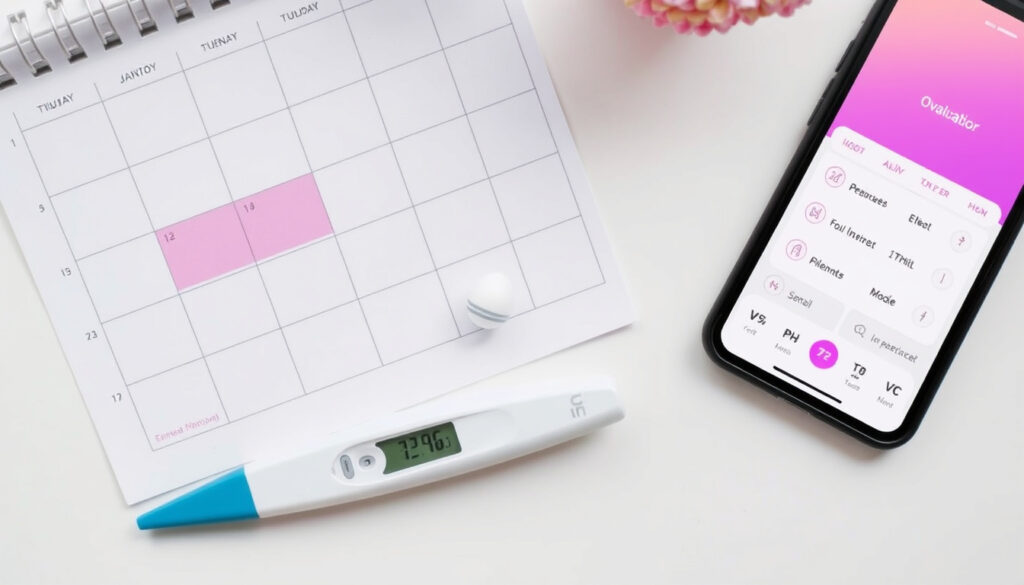
When Do You Ovulate – Timing, Signs and How to Track
Ovulation usually happens about 12–14 days before the next period starts. But the exact day depends heavily on the length of your entire cycle, not just on when bleeding ends. Understanding the timing, the signs, and the tracking methods available can help anyone better understand their fertility.
When Do You Ovulate After Your Period?
Ovulation occurs around day 14 of a 28-day cycle, but the actual day varies by cycle length.
Your most fertile days are the 5 days before ovulation and the day of ovulation itself.
Look for changes in cervical mucus, a slight rise in basal body temperature, and mild pelvic pain.
Use ovulation predictor kits, fertility monitors, or track symptoms with a calendar app.
- Ovulation timing is not fixed – it can range from day 8 to day 60 even in regular cycles.
- The fertile window opens about 5 days before ovulation and closes the day after.
- Sperm can live up to 5 days, so having intercourse in the days before ovulation is key for conception.
- Ovulation symptoms (mucus changes, temperature shift) are reliable indicators when tracked consistently.
- Cycle length matters: a 28-day cycle typically ovulates on day 14, but a 35-day cycle ovulates around day 21.
| Fact | Source |
|---|---|
| Ovulation is the release of an egg from the ovary. | Cleveland Clinic |
| In a 28-day cycle, ovulation usually happens around day 14. | NHS |
| Ovulation occurs 12–16 days before your next period starts. | Tommy’s |
| The egg lives only about 12–24 hours after release. | Stanford Children’s |
| The fertile window lasts about 6 days (5 days before + day of ovulation). | PMC / Wilcox et al. |
How Does Cycle Length Affect Ovulation Timing?
A menstrual cycle is counted from the first day of one period to the first day of the next. Because cycles vary in length, the day of ovulation shifts accordingly. For a 28-day cycle, ovulation is often around day 14. In a 26–28-day cycle, ovulation typically falls on days 12–14.
Short cycles, such as a 21-day cycle, can push ovulation as early as days 6–10. If you have a short cycle and bleed for several days, it is possible to ovulate soon after your period ends. Conversely, longer cycles, like a 35-day cycle, may see ovulation around day 21 or later.
For many women with regular cycles, ovulation falls between day 11 and day 21. But the exact timing depends entirely on your personal cycle length, not on a fixed calendar date.
28-Day Cycle: When Do I Ovulate?
In a standard 28-day cycle, ovulation is most common around day 14. The fertile window would then span roughly days 9–14 or 9–15, depending on the method used. This is the classic example found in most textbooks and patient education materials from the NHS.
Short Cycles and Early Ovulation
If your cycle is 21 days long, ovulation can occur around day 7. When a period lasts 5–7 days, ovulation may happen almost immediately after bleeding stops. Because sperm can survive in the reproductive tract for up to about 5 days, pregnancy is possible from intercourse that occurs near the end of a period in short cycles.
Long Cycles and Late Ovulation
With a 35-day cycle, ovulation is often around day 21. The fertile window shifts later in the month as a result. For anyone with cycle lengths outside roughly 21–35 days, or with cycles that vary by more than about 7 days from month to month, predicting ovulation becomes more challenging and combination tracking methods are recommended.
What Are the Signs and Symptoms of Ovulation?
The body gives several cues that ovulation is approaching or has already occurred. Recognizing these signs can help identify the fertile window without relying solely on calculations.
Cervical Mucus Changes
Cervical mucus typically becomes clearer, wetter, slippery, and stretchy around ovulation. It is often described as resembling raw egg whites. This is one of the most reliable natural signs that ovulation is near.
Basal Body Temperature Shift
Basal body temperature (BBT) rises slightly after ovulation and stays elevated until the next period begins. This shift confirms that ovulation has already happened, so it is useful for tracking patterns rather than predicting the exact moment.
Other Common Signs
Mild pelvic or abdominal pain, sometimes called mittelschmerz, can occur on one side. Increased libido, breast tenderness, bloating, and light spotting are also reported. Some people notice changes in cervical position and softness when checking manually. The Cleveland Clinic notes that these signs vary from person to person and cycle to cycle.
Some symptoms, like cervical mucus changes and mittelschmerz, happen before or during ovulation. Basal body temperature, however, usually confirms ovulation after it has already occurred.
How Can You Track Ovulation?
Several proven methods exist for estimating or confirming ovulation. Combining multiple approaches yields the most reliable results, especially for those with irregular cycles.
Ovulation Predictor Kits (OPKs)
These urine tests detect the luteinizing hormone (LH) surge that triggers ovulation. A positive result means ovulation is likely to happen within about 24–36 hours. For a 28-day cycle, testing often starts around day 10. Earlier testing is recommended for shorter cycles.
Calendar Method and Fertility Apps
Tracking the first day of each period over several months allows you to estimate ovulation based on cycle length. This works best for people with regular cycles. Fertility charting apps combine period dates, mucus observations, BBT, OPKs, and symptoms for a more complete picture.
Cervical Mucus Monitoring
Observing daily changes in vaginal mucus is a free, natural way to detect approaching ovulation. The most fertile mucus is clear, slippery, stretchy, and egg-white-like.
Basal Body Temperature Charting
Taking your temperature every morning at the same time before getting out of bed can confirm ovulation after it has happened. A sustained temperature rise indicates that ovulation occurred. The Stanford Children’s ovulation calculator provides a rough starting point for cycle tracking.
Ultrasound Monitoring
Transvaginal ultrasound is the most exact method for detecting ovulation but is typically used only in clinical fertility settings. For most people, a combination of at-home methods is sufficient.
Symptom tracking alone is not perfectly reliable. The Wilcox study (PMC) found that ovulation can occur as early as day 8 or as late as day 60. Combining OPKs, BBT, and mucus tracking improves confidence significantly.
How Long Does Ovulation Last and When Is the Fertile Window?
Ovulation itself is the moment the egg is released. The egg remains viable for about 12–24 hours after release. However, the fertile window—the time when pregnancy is most likely—lasts about 6 days total: roughly five days before ovulation plus the day of ovulation.
This extended window exists because sperm can survive in the reproductive tract for up to about 5 days. For a 28-day cycle with ovulation on day 14, the fertile window would span approximately days 9–14 or 9–15, depending on the definition used by different medical sources. The Tommy’s ovulation calculator can help estimate the window based on your cycle length.
- Day 1: First day of menstrual period (bleeding).
- Day 5–7: Period usually ends; the follicular phase begins.
- Day 7–14: Follicle-stimulating hormone (FSH) encourages an egg to mature.
- Day 12–16 (approx.): Luteinizing hormone (LH) surges, triggering ovulation.
- Day 14 (in a 28-day cycle): Ovulation occurs. Egg is released and travels down the fallopian tube.
- Day 15–28: Luteal phase – if no fertilization, the egg disintegrates and period starts.
Can You Be Certain About the Day You Ovulate?
For most women, ovulation occurs 12–16 days before the next period starts, and that pattern is relatively stable. Ovulation can be confirmed by a positive urine LH test, which typically appears 24–36 hours before ovulation. Basal body temperature also confirms ovulation after the fact by showing a sustained rise.
But the exact day varies from cycle to cycle, even in people with regular periods. Women with irregular cycles may not ovulate every cycle (anovulation). Research data from Wilcox et al. (PMC) shows that ovulation can occur as early as day 8 or as late as day 60. Symptom tracking alone is not 100% accurate—combining methods improves confidence.
| Established Information | Information That Remains Unclear |
|---|---|
| Most women ovulate 12–16 days before their next period. | The exact day varies from cycle to cycle, even for those with regular periods. |
| Ovulation can be confirmed by a urine LH test (positive 24–36 hours before). | Women with irregular cycles may not ovulate every cycle (anovulation). |
| Basal body temperature rises after ovulation and stays elevated until your period. | Ovulation can occur as early as day 8 or as late as day 60 (research data). |
Why Ovulation Timing Matters for Fertility and Cycle Health
Understanding when you ovulate is crucial for both conception and avoiding pregnancy. The fertile window and cycle length help individuals make informed decisions about timing intercourse or using contraception.
The PMC study by Wilcox (2000) demonstrated that the fertile window spans 6 days and that ovulation can occur much earlier or later than the average day 14. Clinicians emphasize that cycle regularity is a better predictor than a fixed calendar calculation. For irregular cycles, medical guidance may be needed, particularly if cycles are consistently outside the 21–35-day range or vary by more than about 7 days.
Ovulation tests and fertility monitors have become more accessible, but they still require correct usage and consistent cycle tracking to be effective.
What Do Medical Sources Say About Ovulation Timing?
Ovulation occurs as early as the eighth day and as late as the 60th day of the menstrual cycle.
Wilcox AJ et al., The timing of the ‘fertile window’ in the menstrual cycle, PMC
It’s difficult to pinpoint exactly when ovulation happens, but in most women it happens around 10 to 16 days before the next period.
NHS, Periods and fertility in the menstrual cycle
Ovulation is when your ovary releases an egg. It happens around the 14th day of a 28-day menstrual cycle. But the exact timing can vary.
Cleveland Clinic, Ovulation: Calculating, Process, Pain & Other Symptoms
What Should You Do Next to Understand Your Ovulation?
If you want the best estimate of your ovulation, track your periods for several months to identify patterns. Use a fertile window calculator for a rough starting point, add ovulation predictor kits (OPKs), watch for cervical mucus changes, and confirm with basal body temperature. For people with irregular cycles, combining methods is much more reliable than relying on calendar predictions alone. If cycles are consistently irregular or ovulation signs remain unclear, consulting a healthcare provider is advised. Learn more about ovulation timing after a period and fertile window and ovulation tracking methods.
Frequently Asked Questions About Ovulation Timing
How long does ovulation last?
Ovulation is the moment the egg is released and occurs within minutes. The egg remains viable for about 12–24 hours. However, the fertile window (when sperm can fertilize the egg) lasts up to 6 days.
Can I get pregnant if I have sex during my period?
It is unlikely but possible, especially if you have a short cycle. Sperm can live up to 5 days, so if you ovulate early, sex on the last days of your period could lead to pregnancy.
Do I ovulate every month?
Most women ovulate monthly, but it is common to have anovulatory cycles (no ovulation) occasionally. Conditions like PCOS can cause frequent anovulation.
What does ovulation pain feel like?
Ovulation pain (mittelschmerz) is usually a mild, one-sided ache in the lower abdomen that lasts a few minutes to a few hours.
When is the best time to take an ovulation test?
Test once a day in the afternoon (between 12pm and 8pm) because the LH surge typically begins in the early morning and shows up in urine later.
If my period lasts 3 days, when do I ovulate?
With a 3-day period, ovulation timing depends on your total cycle length. In a 28-day cycle, ovulation still occurs around day 14. In a short 21-day cycle, ovulation could happen around day 7, soon after bleeding ends.
If my period lasts 5 days, when do I ovulate?
For a 28-day cycle with a 5-day period, ovulation is still around day 14. In shorter cycles, ovulation may occur very close to when bleeding stops, making it possible to conceive from intercourse at the end of the period.
Do you ovulate before or after your period?
Ovulation typically occurs after your period ends. You do not usually ovulate while actively on your period. Ovulation happens in the middle of the cycle, roughly 12–16 days before the next period starts.
How does an ovulation test work?
Ovulation predictor kits (OPKs) test urine for the luteinizing hormone (LH) surge. A positive result indicates that ovulation is likely to happen within about 24–36 hours.
What is the best ovulation calculator for irregular periods?
Standard online calculators are less reliable for irregular cycles. For best results, combine a calculator with OPKs, BBT tracking, and cervical mucus observation. Medical evaluation is recommended if cycles are consistently irregular.
More related posts
 Old Trafford Cricket Ground – History, Facts and Visitor Guide
 B&Q Paisley – Address, Hours, Phone and Services Guide
 Nike Gore-Tex Trainers – Best Waterproof Options 2025
 Cast of Transformers Film Series – Full List by Movie
 How Old Is Debbie Harry – Age, Birthday and Bio 2025
 Instagram Profile Picture Viewer – Full HD Downloads No Login
 Place in the Sun Presenters – Where Are They Now 2025
 Microsoft Flight Simulator 2024 – Release Date, PS5, and Career Mode