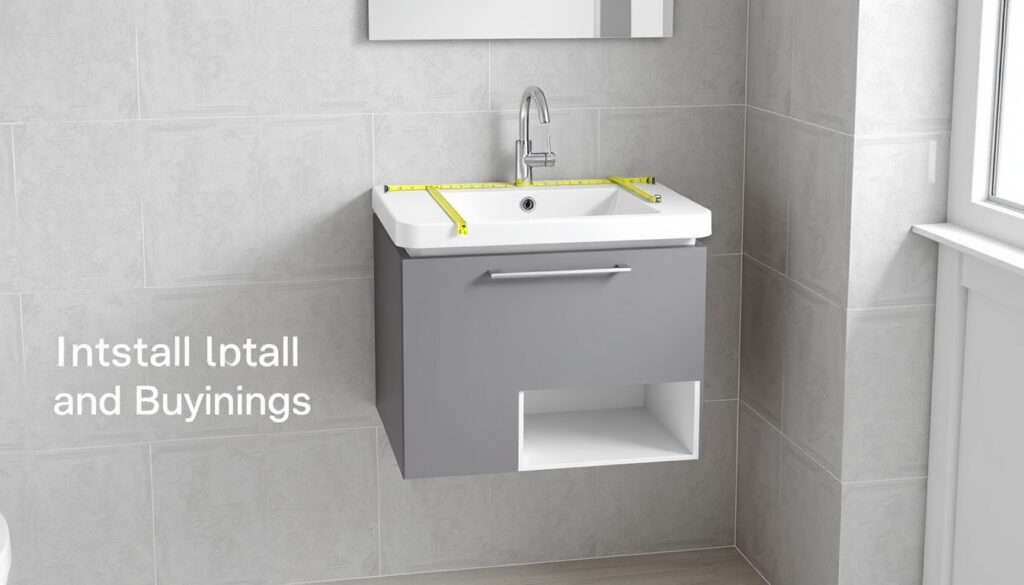
Wall Hung Vanity Unit – Sizes, Installation And Buying Guide
A wall hung vanity unit is a bathroom cabinet and basin combination mounted directly onto the wall, leaving the floor underneath clear. Unlike traditional floor-standing models, these units are fixed to the wall using concealed brackets, creating a floating effect that has become a hallmark of contemporary bathroom design. The absence of legs or a plinth not only changes the visual feel of a room but also alters practical considerations around cleaning, storage, and installation.
The concept is straightforward: the cabinet, which often includes an integrated basin or a recess for a separate basin, is secured to structural wall elements. Plumbing is routed through the wall or concealed within a rear void, eliminating exposed pipes. This approach has made wall hung units a popular choice in modern bathrooms, particularly where floor space is limited or where a minimalist aesthetic is desired.
500mm, 600mm, 800mm, 900mm, 1200mm
Most units use MDF/HDF with moisture-resistant coatings; check IP rating if applicable
Typically 30-60kg depending on wall fixings and bracket quality
Requires wall anchoring (stud or plasterboard fixings) and concealed pipework
Key Insights at a Glance
- Choosing the right size depends on available wall space and basin width.
- Wall hung units create an illusion of space, ideal for small bathrooms.
- Waterproofing is not absolute; proper sealing and ventilation prolong lifespan.
- Installation is more complex than floor-standing units but offers cleaning advantages.
- Price varies widely by material (MDF vs solid wood), brand, and included basin.
- Load capacity is influenced more by wall fixings than by the unit itself.
- Standard widths in the UK range from 500mm to 1200mm, covering cloakrooms to double basins.
Quick Reference: Key Facts About Wall Hung Vanity Units
| Attribute | Typical Value |
|---|---|
| Standard widths | 500mm, 600mm, 800mm, 900mm, 1200mm |
| Material | MDF, HDF, plywood, solid oak |
| Finish options | Gloss, matt, wood effect, painted |
| Water resistance | Sealed edges, moisture-resistant board, optional waterproof topcoat |
| Weight capacity | 30-60 kg (check manufacturer spec) |
| Included items | Often basin and fixings; tap and waste usually separate |
| Installation time | 1-2 hours (professional) / 3-4 hours (DIY) |
What Sizes Are Wall Hung Vanity Units Available In?
Wall hung vanity units are manufactured in a broad range of widths, depths, and heights to suit different bathroom layouts. The most common widths span from compact 500mm models up to expansive 1200mm units designed for double basins. Understanding which size works for your space requires measuring both the available wall area and the clearance needed around adjacent fixtures.
Standard Width Options
The 600mm unit is widely considered the standard for single bathrooms in the UK, balancing basin space with floor area. For smaller cloakrooms, 500mm units are a practical choice. Larger bathrooms often accommodate 800mm or 900mm units, while 1200mm options are typically reserved for double basin installations or luxury layouts. A 600mm unit can feel adequate for a compact bathroom, but an 800mm unit offers additional counter space and storage without overwhelming the room.
Height and the Floating Effect
The basin top is usually installed between 79cm and 86cm from the floor, a range that suits most adults. Taller individuals may prefer a higher placement to avoid hunching. The bottom of the unit should sit at least 12 to 18 inches (30-46cm) above the floor to preserve the floating aesthetic and allow easy cleaning. A gap of less than 8-9 inches undermines the visual effect. Cloakroom units are typically shorter, with overall heights of 500-600mm, while standard wall-mounted units measure 850-900mm from floor to basin top.
Depth and Clearance
Most units have a depth of 45-55cm. It is recommended to maintain a minimum 200mm clearance from toilets, baths, and shower enclosures to avoid a cramped layout. For the cleanest finish, plumbing is routed through the wall, and the rear void of a wall-mounted unit conceals bottle traps and pipework.
When measuring for a wall hung vanity unit, account for the full width of the cabinet plus any overhang from the basin. Check that door swings and bathroom traffic flow are not obstructed. A minimum of 75cm of floor space in front of the unit is recommended for comfortable movement.
Are Wall Hung Vanity Units Waterproof?
The short answer is that most units are water-resistant rather than fully waterproof. Manufacturers typically use moisture-resistant materials such as MDF or HDF with sealed edges and a protective topcoat. However, prolonged exposure to standing water or high humidity can still cause damage over time, particularly on unprotected edges and joints.
Materials and Construction
Common materials include moisture-resistant MDF, HDF, plywood, and solid oak. Gloss and matt finishes add a layer of protection, but the critical factor is how well the edges and joints are sealed. Some manufacturers apply a waterproof topcoat for additional defence. It is advisable to confirm the specific water-resistance rating of a unit before purchase, particularly for bathrooms with limited ventilation.
Sealing for Longevity
A continuous silicone sealant bead along all edges where the unit meets the wall and floor is essential for preventing water ingress. Larger units, such as those 1200mm and above, require more sealant and a longer curing time to achieve a watertight finish. Promptly wiping up spills and ensuring adequate ventilation will also help extend the life of the unit.
No wall hung vanity unit should be considered impervious to water. Even units labelled as waterproof can suffer damage if water is allowed to pool on surfaces or seep into unsealed joints. Regular maintenance and proper sealing are necessary for long-term durability.
How Do You Install a Wall Hung Vanity Unit?
Installation involves marking the position on the wall, locating suitable fixings, preparing the wall type, securing the unit, and sealing the edges. Professional installation typically costs between £150 and £300 in the UK, depending on the unit size and wall complexity. The process differs significantly based on whether the wall is solid brick or plasterboard.
Wall Type and Fixings
Solid brick walls accept standard fixings without additional preparation. Stud walls require noggin reinforcement before the unit can be safely mounted. Standard hollow plasterboard needs reinforcement behind the unit to support the weight. For units 800mm and above, which can weigh 30-50kg when fully loaded, a minimum of two wall studs or reinforced noggins is required. A stud finder should be used to identify fixing points.
Step-by-Step Installation Overview
- Use a spirit level and pencil to mark the unit position on the wall. Larger units (1000mm+) require longer level lines, increasing the risk of uneven installation on non-flat walls.
- Locate wall fixings using a stud finder. Identify at least two studs or plan for reinforced noggins.
- Check the wall type. Solid walls are straightforward; stud and plasterboard walls need reinforcement.
- Ensure the unit is level across its full width before final tightening. Floor-standing units 1500mm+ require full-width checking, as minor floor undulations create visible tilt.
- Apply a continuous silicone sealant bead along all edges where the unit meets the wall and floor. Units 1200mm+ have greater perimeter length, requiring more sealant and longer curing time.
Concealed pipework is routed through the rear void of the unit. This eliminates exposed pipes and provides a clean finish. The NHBC has published standards for wall-mounted units that detail the required fixings and load considerations. UK Building Regulations Part G also applies to sanitary fittings and water safety.
Wall Hung vs Floor Standing Vanity Units: Which Is Better?
The choice between wall hung and floor standing depends on priorities around space, storage, cleaning, and budget. Wall hung units create an illusion of more floor space and are easier to clean underneath, but they typically offer less storage. Floor-standing units are generally more affordable and simpler to install but take up more visual and physical room.
Key Differences at a Glance
| Feature | Wall-Hung | Floor-Standing |
|---|---|---|
| Space perception | Creates illusion of more floor space | Takes up more physical room |
| Best for | Small/compact bathrooms | Larger bathrooms |
| Storage | Limited | Greater storage capacity |
| Installation difficulty | Professional required; secure wall needed | DIY-friendly; simple positioning |
| Installation cost | £150-£300 average | Lower cost |
| Cleaning | Easy (sweep/mop underneath) | More effort around base |
| Wall preparation | May need reinforcement | None required |
In terms of durability, floor-standing units are more robust due to their grounded structure. Wall hung units can be equally durable if professionally installed, but they are susceptible to damage if incorrectly fitted. Height flexibility is a clear advantage of wall hung designs, which allow ergonomic customisation for taller or shorter users. The Which? bathroom furniture buying guide offers further comparison points for UK consumers.
How Much Weight Can a Wall Hung Vanity Unit Hold?
Standard wall hung units (800mm and above) typically weigh between 30kg and 50kg when fully loaded with the cabinet, basin, water, and contents. When properly installed into solid walls with appropriate fixings, the maximum safe load can exceed 100-150kg, including the weight of a person leaning on the unit. However, installation quality is more critical than the unit itself. Proper fixings into solid walls support significant weight, but the same unit mounted on unreinforced plasterboard may hold far less. Always follow manufacturer instructions exactly and confirm wall strength and fixing type before installation.
The UK Building Regulations Part G provides sanitary fitting guidance that applies to these installations. Brands such as Crosswater and Drench provide specific load capacities in their product datasheets.
For heavy stone basins, confirm that both the unit and the wall fixings are rated for the combined weight. Using heavy-duty brackets and anchoring into wall studs significantly improves load-bearing capacity. When in doubt, consult a professional installer.
How Have Wall Hung Vanity Units Evolved Over Time?
- 1970s: Early floating vanities appear in high-end European bathrooms, primarily in bespoke architectural projects.
- 1990s: Wall hung designs become mainstream in contemporary architecture, driven by minimalist trends.
- 2000s: Concealed pipework and minimalist designs gain popularity, making the floating look more achievable in standard homes.
- 2010s: Mass-market availability grows. Sizes standardise around 500mm, 600mm, 800mm, 900mm, and 1200mm, making selection easier for consumers.
- 2020s: Waterproof materials improve significantly. Smart vanities with integrated lighting and sensor taps emerge as premium options.
The Crosswater wall hung vanity collections illustrate the design evolution from basic cabinetry to integrated storage and high-end finishes. Today, modular systems that allow custom width combinations are becoming more common.
Are Wall Hung Vanity Units Completely Waterproof and Safe?
| Established Information | Information That Remains Unclear |
|---|---|
| Most units use moisture-resistant materials such as MDF or HDF with sealed edges. | No unit is fully impervious to prolonged water exposure; manufacturer claims vary widely. |
| Continuous silicone sealant along perimeter edges prevents water ingress. | The long-term performance of sealant depends on application quality and maintenance. |
| Properly installed units on solid walls can support 100-150kg+ safely. | Load capacity on plasterboard walls is highly variable and depends on reinforcement quality. |
| Professional installation (£150-£300) ensures correct anchoring and sealant application. | DIY installation outcomes are less predictable and may void warranties. |
What Should You Consider Before Buying a Wall Hung Vanity Unit?
Wall hung vanity units are a key element in modern bathroom design, offering a floating aesthetic that visually enlarges the space. The choice of size directly impacts usability and visual balance. Waterproofing is a critical factor: while manufacturers use moisture-resistant materials, no unit is impervious to standing water. For small bathrooms under 3m², a 600mm unit balances storage and floor space. Installation requires careful wall assessment; load-bearing capacity can be improved by using heavy-duty brackets and anchoring into studs. When comparing to floor-standing, wall hung units trade storage volume for easier floor cleaning and a contemporary look. Recent trends include integrated basins, soft-close drawers, and LED mirrors. For UK buyers, checking dimensions, warranty, and compatibility with existing plumbing is essential.
What Do Industry Standards Say About Wall Hung Vanity Units?
Several authoritative sources provide guidance on wall hung vanity units. The British Bathroom Manufacturers Association (BBMA) publishes standards for bathroom furniture construction and finish. The NHBC provides installation guidelines for wall-mounted units, covering the required fixings and load considerations for new homes. UK Building Regulations Part G governs sanitary fittings and hot water safety. Manufacturer datasheets from brands such as Crosswater, Drench, and Bathroom City offer specific product specifications including load capacities, material composition, and warranty terms. The Which? buying guide provides consumer-oriented advice for comparing bathroom furniture options.
The quality of installation is more critical than the unit itself. Proper fixings into solid walls support significant weight. Always follow manufacturer instructions exactly.
NHBC installation guidelines
Wall hung vanity units create an illusion of more floor space. They are best for small and compact bathrooms where visual openness is a priority.
Industry design guidance
What Is the Best Choice for Your Bathroom?
The decision between a wall hung and a floor-standing vanity unit ultimately depends on your bathroom dimensions, wall type, storage needs, and budget. Wall hung units excel in smaller spaces where a clean, open look is desired, and they offer easier floor cleaning. Floor-standing units provide more storage and simpler installation at a lower cost. For most UK bathrooms, a 600mm or 800mm wall hung unit represents a solid balance of style and practicality. Ensure that your wall can support the unit, that waterproofing measures are in place, and that you work with a qualified installer if there is any doubt about the wall construction. Explore the Wall-Hung Vanity Unit Installation Guide for detailed steps, and review the Wall-Hung vs Floor-Standing Vanity Units Comparison to weigh your options further.
Frequently Asked Questions
Do wall hung vanity units come with a sink?
Many are sold as a unit with an integrated basin, but some are just the cabinet. Check product descriptions carefully.
Can I install a wall hung vanity unit on a tiled wall?
Yes, but you must drill through the tile carefully using a tile bit and ensure the fixings anchor into sound wall material.
How do I clean a wall hung vanity unit?
Use a damp cloth and mild detergent. Avoid abrasive cleaners. Wipe up water spills promptly to protect edges.
What is the best brand for wall hung vanity units?
Popular UK brands include Crosswater, Drench, Bathroom City, and Plumbworld. Choice depends on budget and style.
Are wall hung vanity units suitable for family bathrooms?
Yes, but ensure weight capacity supports daily use. Consider soft-close drawers for child safety.
How much does professional installation cost in the UK?
Professional installation typically costs between £150 and £300, depending on unit size, design complexity, and wall type.
What is the minimum gap needed under a wall hung unit?
A gap of at least 12 inches (30cm) is recommended for the floating effect and cleaning access. Less than 8-9 inches compromises the aesthetic.
Can I use any basin with a wall hung vanity unit?
Not all basins are compatible. The unit must be designed to accept the basin shape and weight. Integrated basins are the simplest option.
More related posts
 Blackout Curtains for Bedroom – Best UK Brands, Types and Buying Guide
 How Old Is Nigel Farage – Age, Birthday and Career Facts
 Crystal Palace vs Wolves – Full H2H Record, Results and Predictions
 Map of the UK – Political, Road & Digital Maps Guide
 Reverse Osmosis Water Filter – Best UK Picks Tested
 Cobra Kai Season 6 Release Date – Parts 1, 2 & 3 Schedule
 Side Tables for Living Room – Small, Storage & Modern Guide
 Shell Share Price UK – Live Quote, Charts & Analysis