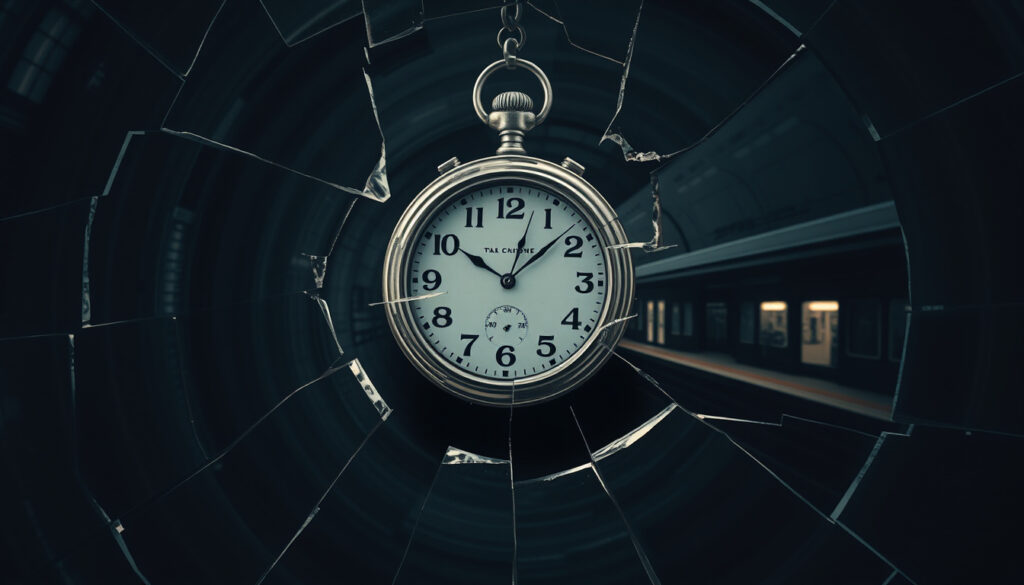
X-Men Days of Future Past – The Time Travel Reboot Explained
Wolverine travels back to 1973 to prevent a war between humans and mutants that leads to near-extinction. X-Men: Days of Future Past, released in 2014, brought together the original X-Men cast with the younger actors from X-Men: First Class in a story that reset the film series timeline.
Directed by Bryan Singer, the seventh film in the X-Men series uses a dual-timeline structure: a dystopian future where mutant-hunting Sentinels have almost wiped out all mutants, and a past in 1973 where the key events that trigger that future can still be changed. The film was both a critical and commercial success, earning over $747 million worldwide.
Beyond the theatrical release, a longer alternate version known as The Rogue Cut restores a subplot centred on Anna Paquin’s character, adding nearly 20 minutes of footage. The film continues to be discussed for its time travel logic, its place in the franchise, and its relationship to the original Marvel comic story.
What is the plot of X-Men: Days of Future Past?
2014
Bryan Singer
Hugh Jackman, James McAvoy, Michael Fassbender, Jennifer Lawrence, Patrick Stewart, Ian McKellen
130 min (theatrical) / 149 min (Rogue Cut)
- The film merges two timelines – a dystopian future (2023) and a past (1973) – to reset the X-Men universe.
- Wolverine is sent back in time to prevent the creation of the Sentinels, which in the original timeline exterminated mutants.
- The Rogue Cut restores a subplot involving Rogue and adds about 19 minutes, offering a different narrative focus.
- Days of Future Past effectively rebooted the X-Men film series, ignoring the earlier films’ continuity (except First Class).
- Quicksilver’s kitchen scene became an iconic, fan-favourite moment, noted for its creative use of slow motion.
| Fact | Value |
|---|---|
| Budget | $200 million |
| Worldwide Box Office | $747.9 million |
| Rotten Tomatoes (Critics) | 91% (fresh) |
| Rotten Tomatoes (Audience) | 91% |
| Metacritic Score | 74/100 |
| IMDb Rating | 7.9/10 |
| MPAA Rating | PG-13 |
The future timeline, set in 2023, opens with surviving mutants hiding from Sentinels that can adapt to any power. Kitty Pryde, using her ability to project a person’s consciousness back in time, sends Wolverine’s mind into his younger body in 1973. In the past, Wolverine must stop Mystique from assassinating Bolivar Trask, the inventor of the Sentinel program. The mission succeeds, and Wolverine awakens in a rewritten present where many dead characters are alive again.
How does the time travel work in Days of Future Past?
The film uses a consciousness-transfer method. Kitty Pryde projects Wolverine’s mind back to his past self while his present body remains tethered in the future. This is not physical time travel – only the consciousness moves, and any changes in the past instantly overwrite the future. The mechanism is consistent within the film and allows the story to maintain tension because Wolverine’s future body can be killed.
What is the significance of the ending?
Wolverine wakes in a peaceful new timeline. The X-Mansion is intact, and characters who died in earlier films – such as Cyclops and Jean Grey – are alive. The ending confirms that the events of X-Men: The Last Stand and X-Men Origins: Wolverine have been erased. The final scene shows a young Professor X meeting Wolverine for the first time in this altered continuity.
What is the post-credits scene?
A brief post-credits sequence shows a figure in ancient Egypt – Apocalypse – who later becomes the main antagonist in the 2016 sequel X-Men: Apocalypse.
Who are the main cast members in the movie?
The cast spans two eras. In the dystopian future, Hugh Jackman plays Wolverine, Patrick Stewart portrays an older Professor X, and Ian McKellen appears as an older Magneto. Other future characters include Halle Berry as Storm, Ellen Page as Kitty Pryde, Shawn Ashmore as Iceman, Omar Sy as Bishop, Daniel Cudmore as Colossus, Boo Boo Stewart as Warpath, Adan Canto as Sunspot, and Fan Bingbing as Blink. Peter Dinklage plays Bolivar Trask, the creator of the Sentinels.
In the 1973 timeline, James McAvoy plays a younger Charles Xavier, Michael Fassbender appears as a younger Erik Lehnsherr (Magneto), Nicholas Hoult is Beast, Jennifer Lawrence is Mystique, Evan Peters plays Quicksilver, Josh Helman appears as a young William Stryker, Lucas Till is Havok, and Tye Sheridan appears briefly as a young Cyclops.
The film marks the first time the original X-Men trilogy actors (Stewart, McKellen, Berry, Jackman) appeared alongside the First Class cast. This crossover was made possible by the time travel premise.
What role does Quicksilver play?
Evan Peters portrays Quicksilver, the speedster son of Magneto. In a standout sequence set inside a Pentagon kitchen, he moves at super-speed to disarm guards and rearrange objects while time appears frozen. The scene became one of the most talked-about moments of the film.
How does Days of Future Past connect to the X-Men film series?
Days of Future Past is the seventh entry in the Fox-produced X-Men series. It acts as a direct sequel to X-Men: First Class (2011) and a soft reboot that retcons the events of the original trilogy, X-Men: The Last Stand (2006) and X-Men Origins: Wolverine (2009). By altering history within the story, the film creates a new continuity that later movies such as X-Men: Apocalypse (2016) and Dark Phoenix (2019) follow.
Does Days of Future Past reset the timeline?
Yes. The ending clearly shows a new timeline where many events from earlier films never happened or happened differently. Wolverine returns to a school where Cyclops, Jean Grey, and Professor X are alive. The precise scope of the reset is subject to interpretation – later films reveal that some events, such as the Vietnam War-era origin of Beast and Magneto in First Class, still occurred, while others were overwritten.
What is the chronological order of X-Men movies after this film?
After Days of Future Past, the franchise continues with X-Men: Apocalypse (set in the 1980s) and Dark Phoenix (set in the 1990s), both in the new timeline. The film Logan (2017) takes place in a separate future not directly connected to the main timeline.
For a full viewing guide, see our article on the MCU Disney Plus Announcement (the piece also covers how streaming platforms organise these films).
What is the Rogue Cut and how does it differ from the theatrical version?
The Rogue Cut is an extended version of X-Men: Days of Future Past released on home video in July 2015. It adds approximately 19 minutes of footage that restores Anna Paquin’s Rogue to the future storyline. In the theatrical cut, Rogue appears only briefly; in the Rogue Cut, she is held captive in a Sentinel-occupied X-Mansion and must be rescued by Iceman, Magneto, and Wolverine. After her rescue, Rogue takes over Kitty Pryde’s role in sustaining Wolverine’s consciousness.
The Rogue Cut runs 149 minutes, compared to 130 minutes for the theatrical version. The added scenes deepen the emotional stakes of the future timeline and give Rogue a more substantial role.
What scenes were added in the Rogue Cut?
- A subplot showing the X-Mansion turned into a Sentinel prison.
- Rogue being experimented on and later rescued by her friends.
- Extended dialogue between Iceman and Rogue.
- Additional battle footage in the future timeline.
Director Bryan Singer has stated that the Rogue Cut is an alternate version, not the official canon. The theatrical cut is considered the primary version of the story. However, many fans and critics argue that the Rogue Cut provides more payoff for the future timeline and makes the situation feel more desperate.
Is Days of Future Past faithful to the original comic?
The film is loosely based on the 1981 comic storyline “Days of Future Past” by Chris Claremont and John Byrne. Both the comic and film feature a dystopian future where Sentinels rule and mutants are nearly extinct, and a character travels back in time to prevent the catastrophe. However, significant changes were made for the adaptation.
In the original comic, Kitty Pryde is the one who mentally travels back in time, not Wolverine. The comic’s timeline is shorter and focuses on a single mutant assassination plot. The film expands the story into a full-scale action epic with a more complex character arc for Mystique.
How does the film handle the Sentinels’ origin?
In the film, Bolivar Trask develops the Sentinel program. After Mystique assassinates Trask, the government uses her mutant DNA to create highly adaptive Sentinels. In the comic, the Sentinels’ rise is less directly tied to a single assassination and more to a gradual societal shift. The film’s version makes Mystique’s choice central to the timeline change.
Fans and critics generally agree that the film is an adaptation that captures the spirit of the comic while creating an original narrative suited to the cast and franchise continuity. For more on how comic adaptations handle character line-ups, see our article on the Cast of Transformers Film Series.
How does the film’s timeline unfold?
The story moves between two time periods and includes real-world release milestones. The key events are as follows:
- 1973 – Mystique assassinates Bolivar Trask, accelerating Sentinel development.
- 2023 (future) – Sentinels have killed most mutants and humans who help them.
- 2023 (future) – Professor X and Magneto send Wolverine’s consciousness back to 1973.
- 1973 (past) – Wolverine enlists young Xavier, Magneto, and Beast to stop Mystique.
- 1973 – Quicksilver helps break Magneto out of the Pentagon.
- 1973 – Final confrontation at the White House; Mystique spares Trask; timeline changes.
- May 23, 2014 (real world) – Film premieres theatrically.
- July 14, 2015 (real world) – Rogue Cut released on home video.
How certain are the film’s time travel and continuity rules?
| Established Information | Information That Remains Unclear |
|---|---|
| The film uses a ‘consciousness transfer’ method – Wolverine’s mind is sent to his past self. This is explicitly shown and consistent within the movie. | The scope of the timeline reset – which earlier films are fully erased remains subject to interpretation. Later movies (Apocalypse, Dark Phoenix) clarify partial retention but don’t list every retconned event. |
| The ending clearly shows a new timeline where X-Men: The Last Stand, X-Men Origins: Wolverine, and X-Men (2000) never happened as originally shown. | Whether the Rogue Cut is canon – Bryan Singer has stated it is an alternate version, not the official canon. The theatrical cut is considered the primary version. |
| The film adapts the broad premise of the 1981 comic but significantly changes characters (e.g., Kitty Pryde replaced by Wolverine) and plot details. Fans and critics agree it is a loose adaptation. | No official statement from Marvel or Fox has definitively explained the exact chain of cause and effect for every retconned detail. |
What is the broader context of Days of Future Past in the X-Men franchise?
X-Men: Days of Future Past is the seventh installment in the X-Men film series, released in 2014. It serves as a direct sequel to X-Men: First Class and as a soft reboot that effectively resets the continuity for later films. The movie combines the original cast (Patrick Stewart, Ian McKellen, Hugh Jackman) with the younger First Class cast, creating a crossover that was unprecedented in superhero cinema at the time.
Thematically, the film explores prejudice, sacrifice, and the consequences of violence. The Sentinels represent government weaponisation of fear, while the central conflict – Mystique’s decision to kill or spare Trask – raises questions about extremism and redemption. Critics praised the film’s ambitious narrative, visual effects, and emotional weight. It became the highest-grossing X-Men film at the time of its release, earning $747.9 million worldwide.
The film is often considered one of the best X-Men entries, noted for its clever use of time travel to refresh the franchise while honouring what came before.
What are the key sources and memorable quotes from the film?
Several notable lines from the film have resonated with audiences. The following quotes reflect the film’s themes of hope and change:
“Just because someone stumbles and loses their path, doesn’t mean they’re lost forever.”
– Professor Charles Xavier (Patrick Stewart)
“The future is not set in stone. We can change it. We can change our fate.”
– Professor Xavier (James McAvoy)
“I’ve been waiting for this moment for a very long time.”
– Magneto (Michael Fassbender)
Primary sources for verified production facts include the Wikipedia article, IMDb for cast and crew credits, Rotten Tomatoes and Metacritic for aggregate ratings, Box Office Mojo for financial data, and the official Marvel website for franchise context.
Why does Days of Future Past remain a key film in the X-Men series?
X-Men: Days of Future Past successfully merged two generations of characters, used time travel creatively to reset an uneven franchise timeline, and delivered both critical acclaim and commercial success. Its themes of hope, sacrifice, and second chances continue to resonate, and the existence of the Rogue Cut provides an alternate perspective that deepens the story. For anyone exploring the X-Men film series, this movie is the essential turning point that changed everything. To see how the franchise evolved further, read our MCU Disney Plus Announcement for context on how superhero films are now distributed.
Frequently asked questions about the film
Where can I watch X-Men: Days of Future Past?
The film is available on Disney+ (with subscription), and can be rented/purchased on Amazon Prime Video, Apple TV, Google Play, and Vudu.
How long is the Rogue Cut?
The Rogue Cut has a runtime of 149 minutes, about 19 minutes longer than the theatrical version.
What rating did the movie receive?
It is rated PG-13 for sequences of intense sci-fi violence and action, some suggestive material, and language.
Who directed Days of Future Past?
Bryan Singer directed the film, based on a screenplay by Simon Kinberg.
Did Hugh Jackman play Wolverine in both timelines?
Yes. Hugh Jackman plays Wolverine in both the future and past timelines. His past self appears briefly before his consciousness takes over.
Why is the film called Days of Future Past?
The title comes from the 1981 Marvel comic storyline by Chris Claremont and John Byrne, which also involves time travel and a dystopian future.
Does the movie have a post-credits scene?
Yes. A scene shows an ancient figure – Apocalypse – who becomes the villain in the 2016 sequel.
Is the Rogue Cut considered better than the theatrical cut?
Opinions vary. Many fans prefer the Rogue Cut for its deeper characterisation of Rogue and greater emotional weight in the future timeline, but the theatrical cut is the official version.
What was the budget of X-Men: Days of Future Past?
The production budget was $200 million, making it one of the most expensive X-Men films at the time.
How does the film connect to X-Men: Apocalypse?
Days of Future Past sets up the new timeline that X-Men: Apocalypse (2016) continues. The post-credits scene directly teases Apocalypse as the next threat.
More related posts
 How Old Is Nigel Farage – Age, Birthday and Career Facts
 What Time Is Love Island On Tonight – UK ITV2 Schedule & All Stars Times
 Weather in Eastbourne 10 Days – Mild Dry Spell Ahead
 Lee Min-Ho – Biography, Age, Dramas, and Latest News
 What Is a Zip Code – Definition, Examples and US vs UK Guide
 Avengers Endgame – Cast, Ending, Box Office & Streaming
 Phil Wang – All About His Biography, Wife, Height, and Career