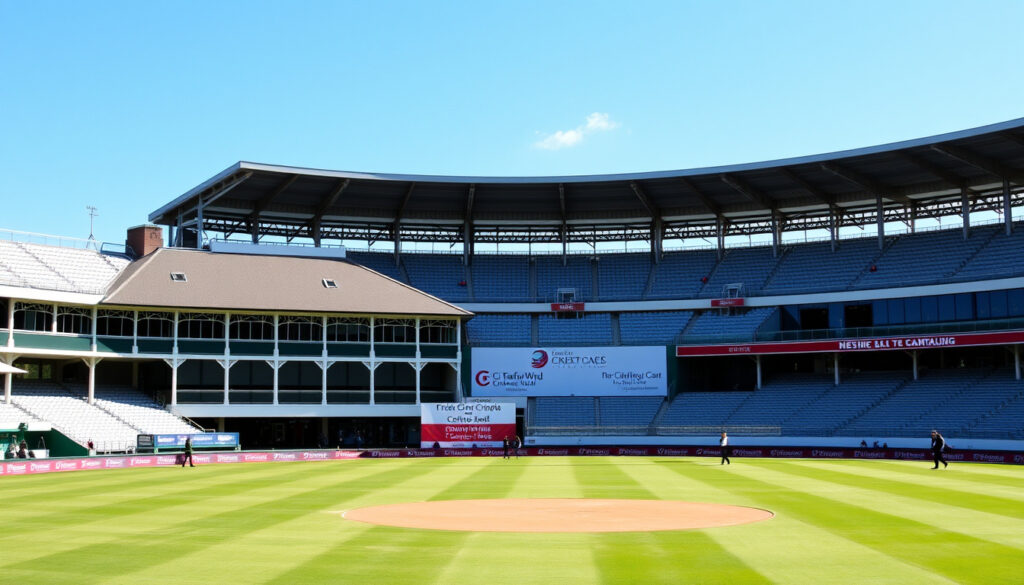
Old Trafford Cricket Ground – History, Facts and Visitor Guide
Old Trafford Cricket Ground, officially branded as Emirates Old Trafford, stands as one of England’s most historic cricketing venues. Situated on Talbot Road in Manchester, this ground has served as the home of Lancashire County Cricket Club since 1864, establishing itself as a cornerstone of English cricket for over a century and a half.
The venue occupies a distinctive position in British sporting heritage, hosting international Tests since 1884 and welcoming some of cricket’s most celebrated moments. Its proximity to Manchester United’s famous football stadium often sparks confusion among visitors, yet the two venues remain entirely separate entities separated by approximately 1.5 miles.
Today, Old Trafford continues to serve as a dual-purpose destination, hosting county matches, international fixtures, concerts, and events throughout the year. Recent redevelopment efforts have transformed the ground into a modern sporting complex while preserving its historic pavilion and traditional character.
What Is Old Trafford Cricket Ground?
Old Trafford Cricket Ground represents one of ten major cricket venues managed by the England and Wales Cricket Board for international fixtures. The ground operates as the primary home of Lancashire County Cricket Club, whose limited-overs team carries the nickname Lancashire Lightning. Unlike many contemporary sporting venues, Old Trafford maintains a grass playing surface that was reoriented to a north-south alignment during the 2000s to optimise playing conditions.
Quick Overview
Key Facts About Emirates Old Trafford
- The venue is the second-oldest Test cricket ground in England, established after only The Oval in London
- Lancashire County Cricket Club has won nine County Championships since the competition’s foundation in 1890
- Old Trafford has hosted five Cricket World Cup tournaments across different decades
- The ground underwent a significant £75 million redevelopment following the loss of Test status in 2009
- Two iconic bowling ends bear the names of Lancashire legends Brian Statham and Alan Whittaker
- The venue operates 365 days per year, hosting concerts alongside sporting events
- Major international artists including Coldplay, Beyoncé, and Bruce Springsteen have performed here
| Fact | Details |
|---|---|
| Coordinates | 53°28′11″N 2°17′24″W |
| Owner | Lancashire County Cricket Club |
| Surface | Grass (north-south orientation since 2000s) |
| Bowling Ends | Brian Statham End, Alan Whittaker End |
| First International | 1884 Ashes Test versus Australia |
| Title Sponsor | Emirates |
The ground is often confused with Manchester United’s Old Trafford football stadium, but they are distinct venues located approximately 1.5 miles apart. The cricket ground sits on Talbot Road in the Old Trafford area of Manchester.
History and Timeline of Old Trafford Cricket Ground
The story of Old Trafford Cricket Ground stretches back to the mid-nineteenth century, long before Lancashire County Cricket Club was formally established. Understanding this timeline reveals how a modest rented field evolved into one of cricket’s most respected venues.
Origins and Early Development
In 1857, Manchester Cricket Club relocated to the site on Talbot Road, renting the ground from Sir Humphrey de Trafford. This move established the foundation for what would become Lancashire’s cricketing home. The club operated from this location for seven years before a pivotal meeting on 12 January 1864 saw the founding of Lancashire County Cricket Club, succeeding Manchester Cricket Club as the ground’s primary tenant.
Lancashire’s first first-class match at Old Trafford came in 1865 against Middlesex, resulting in a 62-run victory that launched the club’s home record. The ground quickly grew in prominence, and by 1884, Old Trafford achieved international recognition when it hosted England’s second Test match against Australia. That inaugural Ashes encounter drew 12,000 spectators on the second day alone, establishing the venue as a major cricketing destination.
Establishment and Growth
Between 1894 and 1895, the iconic pavilion was constructed, a structure that would later serve crucial roles during the First World War when it functioned as a hospital. The club secured full ownership of the ground in 1898 when it was purchased from the de Trafford family, transforming the venue from rented land into permanent property. Detailed records of the ground’s architectural heritage can be found on the Heritage Gateway, which documents structures of local and national significance.
The venue continued accumulating honours throughout the twentieth century, hosting its first Cricket World Cup matches in 1975 and subsequent editions in 1979 and 1983. The ground maintained its status as a premier international venue despite infrastructure that had begun showing its age by the early 2000s.
Modern Redevelopment
The loss of Test match status in 2009 marked a turning point for Old Trafford, prompting a comprehensive redevelopment programme led by BDP architects. The phased reconstruction, spanning from 2005 through the present day, has systematically transformed the venue. Key additions include the restored 1895 pavilion, the Players’ and Media Centre, The Point events venue, hotel facilities, and expanded grandstands.
The redevelopment extended beyond cricket facilities to establish Old Trafford as a major concert venue, with the western side of the ground capable of accommodating up to 250,000 attendees across multiple events. The pitch was reoriented to improve playing conditions, and capacity for cricket expanded to 19,000, making it the third-largest cricket venue in England.
The Red Rose Project, the final eastern phase developed in partnership with Trafford Council, introduces additional grandstand seating, approximately 100 hotel rooms, pitch-side viewing areas, and a new museum and shop facility. A Metrolink-linked entrance is being constructed to improve connectivity with the nearby Manchester United stadium.
Old Trafford Cricket Ground Capacity and Records
Old Trafford’s current cricket capacity stands at 19,000 spectators, positioning it as the third-largest Test venue in England behind Lord’s and The Oval. However, the venue’s versatility allows for significant expansion during non-cricket events, with concert configurations capable of accommodating more than 65,000 attendees.
Venue Records and Achievements
As the second-oldest Test venue in England, Old Trafford has witnessed countless historic moments throughout cricket history. The ground’s record book reflects its importance to the sport, having hosted every major international tournament including five Cricket World Cup editions spanning from 1975 to 2019. Historical match records and statistics are available through the Cricket Archive, which provides comprehensive documentation of matches played at the venue.
The venue has been home to numerous cricketing stars representing Lancashire and England. James Anderson, England’s all-time leading wicket-taker, has dominated the Old Trafford pitch throughout his career. Other notable figures include Andrew Flintoff, whose all-round performances during the 2005 Ashes series captivated audiences, former England captain Mike Atherton, and club legends Glenn Chapple and Neil Fairbrother.
Facilities and Amenities
The modern Old Trafford complex offers facilities spanning 365 days of operation. The restored pavilion, dating from the mid-1800s, anchors the venue’s heritage while new construction provides contemporary hospitality and media facilities. Northern areas house hospitality suites and hotel accommodation, while southern sections feature expanded grandstand seating.
The Point venue serves as a year-round events space capable of hosting functions beyond cricket, contributing to the venue’s financial sustainability. Sustainability considerations have been integrated into the redevelopment programme, with innovative design solutions incorporated throughout the expanded facilities.
Is Old Trafford Cricket Ground the Same as the Football Stadium?
A common source of confusion exists between Old Trafford Cricket Ground and Manchester United’s Old Trafford football stadium. Despite sharing the “Old Trafford” name and geographic proximity, these represent entirely separate venues under different ownership.
Key Differences
Manchester United’s Old Trafford football stadium, opened in 1910 and expanded through numerous post-war reconstructions, currently holds approximately 74,000 spectators. It ranks among the largest football stadiums in the United Kingdom and operates exclusively as a football venue.
Old Trafford Cricket Ground, by contrast, sits on Talbot Road and serves Lancashire County Cricket Club. The cricket venue predates its football counterpart by over 50 years and focuses on cricketing activities alongside concerts and events. The two venues are separated by approximately 1.5 miles within the Old Trafford area of Manchester.
Connectivity Between Venues
Recent development has improved physical connections between the two venues. Brian Statham Way, enhanced as part of the Civic Quarter masterplan, provides a processional route linking the cricket ground with Manchester United’s stadium. A new pedestrian link and integrated piazza route facilitates movement between venues, particularly during major events when both locations experience high visitor volumes.
There has been no merger between Lancashire County Cricket Club and Manchester United. The clubs maintain separate ownership structures, though both venues benefit from improved transport links and coordinated event management through Trafford Council’s planning initiatives.
How to Visit Old Trafford Cricket Ground
Visiting Old Trafford Cricket Ground requires planning, particularly during major international fixtures when demand for tickets and transport peaks. The venue’s location in west Manchester offers excellent public transport connections, though match-day parking remains limited.
Getting There by Public Transport
The Old Trafford Metrolink tram station provides direct access to the venue, with trams running from Manchester city centre and connecting with broader Greater Manchester transport networks. This public transport option represents the most reliable method for reaching the ground, particularly during busy match days when road congestion increases significantly. For more details on the venue and its accessibility, you can visit Kmart Forest Lake.
Trains to Manchester Piccadilly or Manchester Victoria stations followed by tram connections offer additional routes. Visitors staying in the city centre can access Premier Inn Manchester Piccadilly as a nearby accommodation option with good transport links to both the cricket ground and the wider city.
Road Access and Parking
Vehicular access is maintained via Brian Statham Way, which has been enhanced to accommodate event traffic flows. However, parking facilities at the venue remain limited, and visitors are strongly advised to use public transport rather than attempting to drive and park on match days.
Satellite parking arrangements may be communicated through Lancashire County Cricket Club’s official channels, with shuttle services operating from more distant car parks during major fixtures. Checking lancashirecricket.co.uk before visiting provides the most current access information.
Tickets and Match Information
Ticket availability varies significantly between county matches, international fixtures, and major events. International Test matches and limited-overs series typically sell out well in advance, while county championship games often offer walk-up availability. Purchasing tickets through official Lancashire County Cricket Club channels ensures genuine entry and competitive pricing.
For those seeking live sporting action during a visit to Manchester, Football Scores Today Premier League provides current information on football fixtures across the city, offering an alternative sporting experience if cricket tickets prove unavailable.
Timeline: Major Milestones at Old Trafford Cricket Ground
The following chronology captures significant moments in Old Trafford’s development from rented cricket field to premier international venue:
- — Manchester Cricket Club moves to the site, renting from Sir Humphrey de Trafford
- — Lancashire County Cricket Club founded on 12 January, succeeding Manchester Cricket Club
- — Lancashire’s first first-class match at Old Trafford ends in victory over Middlesex
- — England’s second Test venue hosts first Ashes Test against Australia
- — Iconic pavilion constructed; later serves as WWI hospital
- — Ground purchased from de Trafford family, establishing permanent ownership
- — Venue hosts matches during Cricket World Cup tournament
- — Loss of Test status prompts comprehensive redevelopment programme
- — Hosted matches during ICC Cricket World Cup tournament
- — Red Rose Project introduces new eastern facilities and Metrolink entrance
What We Know for Certain and What Remains Unclear
When researching Old Trafford Cricket Ground, distinguishing established facts from uncertain information helps readers understand the reliability of available knowledge.
| Established Information | Information Requiring Clarification |
|---|---|
| Old Trafford Cricket Ground and Manchester United’s Old Trafford are separate venues located 1.5 miles apart | Specific capacity figures for the post-Red Rose Project configuration remain subject to confirmation |
| The cricket ground has been Lancashire County Cricket Club’s home since 1864 | Exact completion date for the eastern phase developments |
| The venue hosts Test matches, World Cups, county games, and concerts | Future Test match scheduling beyond confirmed fixtures |
| Lancashire CCC maintains separate ownership from Manchester United | Long-term sponsorship arrangements beyond current Emirates agreement |
| Public transport access via Metrolink is the recommended approach | Specific details of satellite parking arrangements for individual events |
The Significance of Old Trafford in English Cricket
Old Trafford occupies a unique position within English cricket’s landscape, serving as both a historic monument to the sport’s Victorian-era origins and a modern entertainment venue capable of hosting world-class events. The ground’s influence extends beyond mere statistics to encompass cultural, economic, and sporting dimensions.
Architecturally, the venue tells a story of deliberate evolution. The restored 1895 pavilion stands alongside contemporary construction, demonstrating how heritage and modernity can coexist. BDP’s phased redevelopment approach preserved the ground’s essential character while dramatically expanding its capabilities.
Economically, Old Trafford’s transformation into a multi-purpose venue has implications for Manchester’s visitor economy. Major concerts attract audiences far beyond cricket’s traditional demographic, while the venue’s 365-day operation provides year-round employment and economic activity in an area historically focused on event-specific visits.
Sources and Official Information
This article draws on information from multiple authoritative sources documenting Old Trafford Cricket Ground’s history, facilities, and operations:
Lancashire County Cricket Club’s official records provide detailed information on the club’s founding, home ground history, and current facilities. The club’s historical documentation traces the venue’s evolution from the 1857 origins through to contemporary developments.
Heritage Gateway records document the ground’s architectural heritage, including the pavilion’s construction in 1894–1895 and its subsequent use as a hospital during the First World War. These records confirm ownership transfer details and physical development across the venue’s history.
BDP Architects, responsible for the post-2009 redevelopment, provide comprehensive documentation of the phased construction programme, design philosophy, and facility additions including The Point events venue, hotel facilities, and expanded grandstands.
Summary
Old Trafford Cricket Ground represents a remarkable sporting venue that has evolved continuously since 1857 to serve cricket’s changing needs. Located on Talbot Road in Manchester, the ground has witnessed Test matches, World Cup tournaments, county championships, and legendary performances by cricketing icons including James Anderson, Andrew Flintoff, and Mike Atherton.
The venue’s distinction from Manchester United’s football stadium should be clear: the cricket ground operates independently under Lancashire County Cricket Club ownership, predating its football namesake by over 50 years. Recent redevelopment, including the ongoing Red Rose Project with Trafford Council, ensures the ground remains competitive with other international venues while maintaining its essential heritage character.
For visitors planning attendance at Old Trafford, public transport via the Metrolink network offers the most reliable access, with match-day parking remaining limited despite road improvements through Brian Statham Way. Official Lancashire County Cricket Club channels provide the most current information on tickets, transport arrangements, and venue access procedures.
Frequently Asked Questions
What is the address of Old Trafford Cricket Ground?
Old Trafford Cricket Ground is located on Talbot Road in the Old Trafford area of Manchester, England. The venue sits approximately 1.5 miles from Manchester United’s football stadium and is served by Old Trafford Metrolink tram station.
Does Old Trafford Cricket Ground host international matches?
Yes, Old Trafford is one of ten ECB-designated international venues in England. It has hosted Test matches since 1884, multiple Ashes series, and five Cricket World Cup tournaments across 1975, 1979, 1983, 1999, and 2019.
Are there tours available at Old Trafford Cricket Ground?
Lancashire County Cricket Club offers venue tours that allow visitors to explore the ground, including the historic pavilion, player facilities, and media areas. Tour availability and booking details are published through the club’s official website.
What is the current capacity of Old Trafford Cricket Ground?
The current cricket capacity stands at 19,000 spectators, making it the third-largest cricket venue in England. For concerts, the venue can expand to accommodate more than 65,000 attendees.
Which cricket teams play at Old Trafford?
Lancashire County Cricket Club serves as the primary tenant, competing in the County Championship, One-Day Cup, and T20 Blast competitions under the Lancashire Lightning brand. The England national team also uses the venue for international fixtures.
How far is Old Trafford Cricket Ground from Manchester city centre?
Old Trafford Cricket Ground sits approximately 2-3 miles west of Manchester city centre. The journey takes roughly 15-20 minutes by Metrolink tram or 30-40 minutes by bus, depending on traffic conditions.
More related posts
 How to Stop Snoring Immediately – Proven Fixes for Tonight
 Fleishman Is in Trouble – Book Summary, Hulu Ending, Cast Guide
 Rupert Grint Net Worth – $50 Million from Harry Potter
 Nike Pro Shorts Girls – Size Chart, Volleyball Reviews 2025
 Xbox Game Pass Core – Complete 2025 Guide with Prices and Games
 Lithuania Emergency Belarus Balloons – State of Emergency Explained
 Play Parks Near Me – Free Toddler and Adventure Playgrounds
 Translate English to Spanish – Top Tools for Text, Voice, Docs