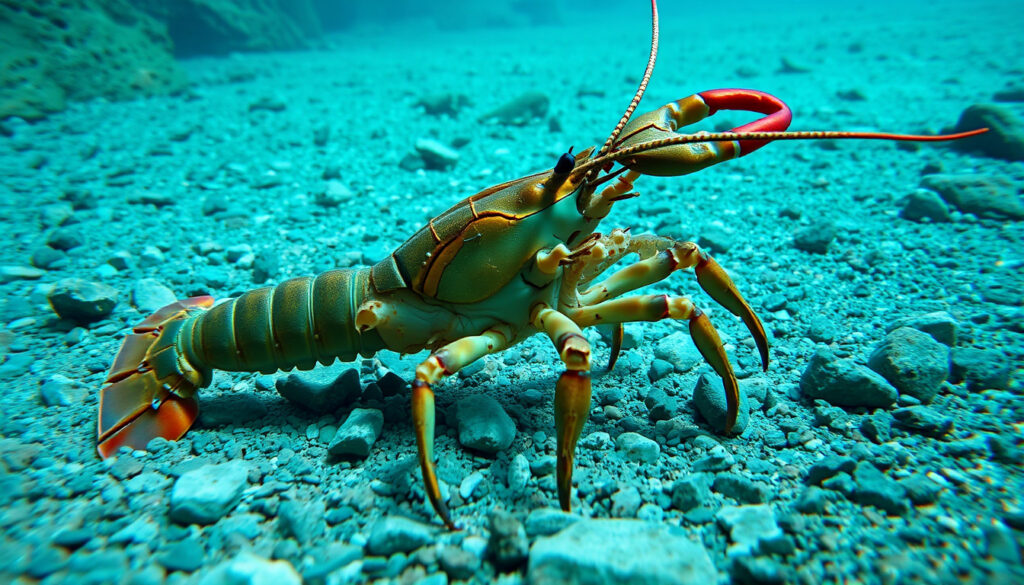
How Many Legs Does a Lobster Have – Settling the 8 vs 10 Debate
Lobsters are among the most recognizable creatures in the ocean, yet questions about their anatomy continue to intrigue both marine enthusiasts and curious minds. The question of how many legs a lobster has may seem straightforward at first glance, but the answer involves surprising biological distinctions that often spark debate. Understanding the leg structure of these decapod crustaceans reveals fascinating details about their evolution, functionality, and classification within the marine world.
The distinction between walking legs and total appendages creates the confusion many people experience when trying to count lobster legs. Their bodies have evolved over millions of years to thrive in challenging marine environments, and each leg serves a specific purpose in their daily survival. From the powerful claws at the front to the smaller appendages along their segmented bodies, every structure plays a vital role in how these creatures navigate, feed, and defend themselves.
This comprehensive examination addresses the leg count question definitively while exploring related anatomical features, habitat preferences, and dietary habits that define these remarkable crustaceans. The information presented draws from established marine biology sources and expert observations from aquarium authorities.
How Many Legs Does a Lobster Have?
The most direct answer to this question is that lobsters have 10 legs in total. This total includes their two prominent claws, which are anatomically classified as the first pair of legs. The scientific classification of lobsters as decapods directly references this ten-legged structure, with “decapod” deriving from Greek words meaning “ten-footed.”
The common confusion between 8 and 10 legs stems from how people count. When excluding the claws and counting only legs used specifically for walking along the ocean floor, the number is 8. However, when including all functional legs, including the clawed front pair used for grasping and manipulation, the total reaches 10. Marine biologists universally count the claws as legs, making 10 the correct biological answer.
Leg Count Overview
10 (8 walking + 2 claws)
Front legs modified for grasping
Also 10 legs total
Decapod crustacean
Key Facts About Lobster Legs
- Claws are anatomically classified as the first pair of legs (chelipeds)
- The remaining eight legs are called pereiopods and are used primarily for walking
- Like humans, lobsters often have a dominant claw on one side
- Female lobsters typically have smaller claws than males of the same species
- Each leg is jointed, allowing flexible movement in multiple directions
- Lobsters can regenerate lost legs and claws over time through a process called regeneration
- The legs contain small sensory hairs that help detect changes in their environment
| Fact | Details |
|---|---|
| Total Legs | 10 |
| Walking Legs | 8 |
| Claws (Chelipeds) | 2 (front legs) |
| Crab Legs | 10 |
| Scientific Order | Decapoda |
| Leg Type | Jointed appendages |
How Many Legs Does a Crab Have?
Crabs, like lobsters, belong to the order Decapoda and share the same total leg count. A crab has 10 legs, which includes its two claws at the front. This anatomical similarity reflects their shared evolutionary heritage as decapod crustaceans. The main difference lies in how these appendages are developed and used.
While both creatures have 10 legs, crabs typically have their legs more integrated into their body shape, with the claws positioned at the front in a more compact arrangement. Crabs use their legs primarily for sideways walking along sandy or rocky surfaces, whereas lobsters employ their legs for forward crawling along the ocean floor.
The comparison between lobsters and crabs reveals fascinating evolutionary adaptations. Both have evolved their leg structures to suit their different lifestyles and environments. While lobsters maintain elongated bodies ideal for navigating crevices and burrows, crabs have developed wider, flatter forms that allow them to hide under rocks and move efficiently across ocean floors.
The term “decapod” applies to both lobsters and crabs, meaning they share a common ancestor with ten jointed legs. This classification unites them under the same scientific order, highlighting their anatomical similarities despite their different appearances and behaviors.
What Is a Lobster?
A lobster is a marine crustacean belonging to the family Nephropidae or Homaridae, depending on the specific species. These creatures have inhabited Earth’s oceans for millions of years, evolving sophisticated anatomical features that enable them to thrive in diverse marine environments from shallow coastal waters to depths exceeding 1,000 meters.
Lobsters possess a distinctive body structure consisting of 21 segments distributed across three main regions: the head (6 segments), thorax (8 segments), and abdomen (7 segments). The head and thorax are fused together to form the cephalothorax, which is covered by a hard protective exoskeleton. This external shell must be shed periodically through a process called molting to allow for growth.
The lobster’s body is remarkably designed for survival in challenging marine conditions. Their segmented bodies with jointed legs allow for exceptional mobility, while their powerful tails provide propulsion through the water. The combination of sensory antennae and hair-covered appendages enables them to detect prey, predators, and environmental changes with remarkable precision.
Lobster Body Parts and Uses
The anatomy of a lobster represents millions of years of evolutionary refinement. Each body part has developed specific functions that contribute to the animal’s survival. Beyond the legs and claws already discussed, lobsters possess several other notable anatomical features that warrant examination.
- Antennae: Long sensory appendages used for detecting environmental changes and navigation
- Swimmerets: Small appendages under the abdomen used for swimming and, in females, carrying eggs
- Gills: Five pairs of blood-filled filaments attached to the legs that extract oxygen from water
- Tail: Muscular abdomen section that provides propulsion and is a primary source of meat
- Exoskeleton: Hard protective shell covered in sensory hairs and spines
Lobsters must periodically shed their hard exoskeletons to grow. During this vulnerable molting period, they hide in crevices until their new shell hardens. Some species may change color during this process, though the color typically returns to normal once the new shell fully develops.
Where Do Lobsters Live?
Lobsters inhabit a wide range of marine environments across the world’s oceans. Their preferred habitats include rocky crevices, sandy burrows, and coral reef formations where they can find shelter from predators and access to food sources. These nocturnal creatures spend much of their time concealed in these hiding spots during daylight hours.
Different lobster species have adapted to various environmental conditions. Clawed lobsters, such as the American and European varieties, are commonly found in colder waters along rocky coastlines. Spiny lobsters, lacking large claws, prefer warmer tropical and subtropical waters where they occupy crevices in coral formations and rocky substrates.
Their distribution spans from the Arctic waters of the North Atlantic to the temperate coasts of North America and Europe, and from the Mediterranean Sea to the waters off South Africa and Australia. Some species have even adapted to life in brackish waters where rivers meet the sea.
Habitat Adaptations
The physical structure of lobsters has evolved to suit their benthic, or bottom-dwelling, lifestyle. Their elongated bodies and muscular tails enable efficient movement through complex terrain, while their hard exoskeletons provide protection in environments where threats from predators are constant.
Their nocturnal foraging behavior means lobsters venture out at night to search for food, using their well-developed sensory systems to navigate and locate prey in complete darkness. During these expeditions, they rely on their eight walking legs to traverse the ocean floor with surprising speed and agility.
What Do Lobsters Eat?
Lobsters are opportunistic feeders with a varied diet that reflects their predatory nature. Their powerful claws serve multiple feeding functions: capturing live prey, crushing hard-shelled organisms, and cutting food into manageable pieces. This versatile appendage system makes them effective hunters in their marine environments.
The diet of a lobster typically includes fish, mollusks, sea urchins, starfish, and various crustaceans. They will also consume plant matter and detritus when prey is scarce, demonstrating their ability to adapt their feeding strategies based on availability. Young lobsters often feed on smaller organisms like plankton and small shellfish as they develop their hunting skills.
The hunting behavior of lobsters is most active during nighttime hours when they emerge from their hiding spots to forage along the ocean floor. Their claws are well-suited for grasping and subduing prey, while their smaller walking legs help position food items for consumption.
Feeding Adaptations
Lobsters possess a remarkable ability to adapt their feeding behavior based on circumstance. The crusher claw, typically the larger of the two, can generate enough force to break open the shells of clams and crabs. The cutter claw, smaller and more precise, serves for cutting softer prey into pieces.
Interestingly, lobsters will engage in cannibalistic behavior when food is scarce, particularly during molting when individuals may be more vulnerable. This feeding flexibility underscores their survival capabilities in challenging marine environments where food sources can be unpredictable.
Lobster Anatomy in Context
Understanding lobster anatomy requires placing their physical structures within the broader context of crustacean evolution and biological classification. The decapod designation encompasses not only lobsters and crabs but also shrimp, prawns, and crayfish, each exhibiting variations on the fundamental ten-legged body plan that characterizes this successful group of arthropods.
The classification of lobsters within the order Decapoda reflects their anatomical relationship to other ten-legged crustaceans. However, significant variations exist between lobster species themselves. Clawed lobsters, found primarily in the Atlantic, possess the prominent pincers that most people associate with these creatures. Spiny lobsters, prevalent in tropical waters, have evolved differently, replacing large claws with formidable spiny antennae used for defense.
Juvenile lobsters, sometimes called chicks or pups, initially possess five pairs of legs like their adult counterparts, but their front legs remain small and undeveloped. As they mature through successive molts, these front appendages gradually transform into the characteristic claws of adult lobsters.
8 or 10 Legs: Clarifying the Count
| Established Information | Unverified Claims |
|---|---|
| Lobsters have 10 legs total, including claws | Specific leg counts for individual species variations |
| Claws are anatomically classified as legs (chelipeds) | Exact force measurement of claw strength |
| The term decapod means “ten-footed” | Comprehensive diet studies for all species |
| Lobsters can regenerate lost limbs | Complete regeneration timeline specifics |
Marine biology sources including aquarium authorities and encyclopedic references agree on the total leg count of 10. The debate regarding 8 versus 10 arises from differing interpretations of what constitutes a “leg” versus a specialized appendage. Biological classification consistently includes claws in the leg count.
Lobster Anatomy and Classification Sources
“Lobsters have eight walking legs; the front three pairs bear claws, with the first pair being much larger than the others.”
— Wikipedia: Lobster
“Lobsters have ten legs in total. They use their claws for catching and crushing prey and for defense.”
— Tynemouth Aquarium: Lobster Anatomy Explained
“Lobsters have 10 legs, with eight back legs for walking and two front legs with claws.”
— Lobster Anywhere: Lobster Facts
Summary
The question of how many legs a lobster has yields a clear answer supported by biological science: 10 legs total, comprising 2 claws at the front and 8 walking legs. This classification places lobsters firmly within the decapod order, sharing this characteristic with crabs, shrimp, and other crustaceans. The apparent confusion between 8 and 10 legs resolves when understanding that claws are anatomically classified as legs, despite their specialized function as feeding and defense tools rather than locomotion. Each of these ten legs serves essential purposes in the lobster’s survival, from capturing prey and defending against threats to navigating the complex terrain of the ocean floor.
For those exploring related topics, understanding Debbie Harry’s age offers insights into how long these fascinating creatures have shared our planet, while Carol Vorderman’s age demonstrates the continued human fascination with the natural world that includes species like lobsters that have thrived for millions of years.
Frequently Asked Questions
How many legs do lobsters have?
Lobsters have 10 legs in total, including their two claws. These consist of 2 front legs with claws (chelipeds) and 8 walking legs used for locomotion along the ocean floor.
How many legs does a lobster have including claws?
Including claws, lobsters have 10 legs. The claws are anatomically the first pair of legs and are counted in the decapod classification, where “decapod” means “ten-footed.”
Why do some sources say lobsters have 8 legs?
Some sources count only the legs used for walking, excluding the claws which serve primarily for feeding and defense. This yields 8 walking legs, but biologists include claws in the total count, making 10 the correct biological answer.
How many legs do crabs have?
Crabs also have 10 legs total, including their two claws. Like lobsters, crabs belong to the order Decapoda, which means “ten-footed.” The main difference lies in body shape and how the legs are positioned.
Can lobsters regrow lost legs?
Yes, lobsters can regenerate lost legs and claws through a process called regeneration. This ability allows them to recover from battles with other lobsters or predator attacks. The regenerated limb grows back gradually over successive molts.
What are lobster claws actually called?
Lobster claws are called chelipeds or pincers. The larger claw is the crusher claw, used for breaking open shells, while the smaller one is the cutter claw, used for cutting softer food items.
Do spiny lobsters have 10 legs too?
Yes, spiny lobsters also have 10 legs total. However, their front legs lack large claws like those found on clawed lobsters. Instead, spiny lobsters have prominent spiny antennae used for defense, with nine species currently identified worldwide.
More related posts
 Rob Brydon – Age, Height, Net Worth, Wife, Children and 2025 Tour
 Bon Jovi – Complete Guide to Band, Songs, and Tour Dates
 Joao Pedro – Chelsea Forward Profile Stats and Injury News
 American Golf Near Me – Store Finder, Hours & Fittings
 Anthony Edwards – NBA Stats, Height, Contract and Net Worth
 Is Trading 212 Safe – 2025 UK Review With FSCS Details
 Top of the Rock – Complete Visitor Guide to Views and Tickets
 Air Fryer Roast Potatoes – Crispy Golden in 25 Minutes